
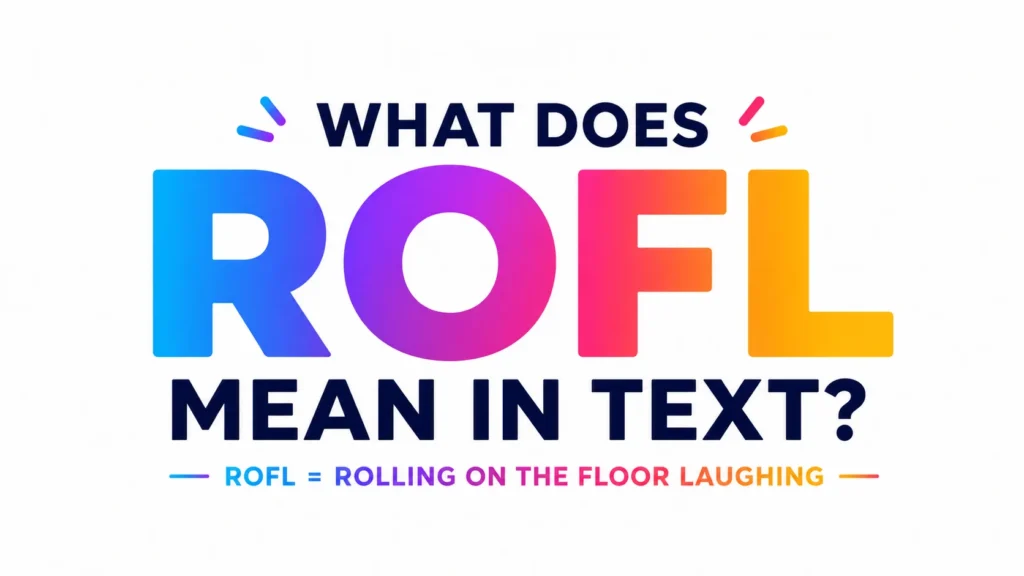
If you spend time texting, scrolling through social media, or chatting in online groups, chances are you’ve seen someone type “ROFL” after something funny. Maybe a friend replied with it during a late-night conversation, or perhaps you spotted it in TikTok comments and wondered whether people still use it today.
The phrase may look simple, yet many people still search for “what does it mean in text” because internet slang changes quickly. Some expressions disappear overnight, while others stay part of digital culture for years. ROFL belongs to that second category.
Understanding it helps you read conversations correctly, avoid awkward misunderstandings, and communicate more naturally online. More importantly, slang like this reveals how people express emotion in fast-moving digital conversations where tone can easily get lost.
ROFL – Quick Meaning
What Does ROFL Mean?
ROFL stands for:
“Rolling On the Floor Laughing”
People use it to show that something is extremely funny.
It’s stronger than a simple “lol” because it suggests uncontrollable laughter rather than a polite reaction.
Quick Definition
- ROFL = intense laughter
- Used mostly in texting and online chats
- Usually casual and playful
- Common in memes, gaming, and social media conversations
Simple Examples
“That video had me ROFL 😂”
“ROFL, I can’t believe you actually said that.”
“Bro… your autocorrect mistake has me ROFL.”
Origin & Background
Where Did ROFL Come From?
ROFL became popular during the early internet era in chat rooms, forums, and instant messaging platforms in the late 1990s and early 2000s.
Back then, people typed quickly and relied on abbreviations because texting and online chatting were slower than today. Expressions like LOL, BRB, OMG, and ROFL became shortcuts for emotion.
Unlike modern emojis, these acronyms carried emotional tone through plain text.
The Rise of Internet Humor
As online culture expanded, ROFL became closely connected to meme culture and gaming communities.
People often exaggerated reactions online for comedic effect. Saying “ROFL” didn’t always mean someone was literally rolling on the floor. Instead, it signaled:
- “That’s hilarious.”
- “I’m laughing really hard.”
- “That joke landed perfectly.”
Eventually, ROFL became part of mainstream texting culture worldwide.
Social Media Influence
Platforms like:
- Tumblr
- Twitter/X
- Discord
- TikTok
helped keep the slang alive.
Although Gen Z now uses emojis and newer expressions more often, ROFL still appears in nostalgic, playful, or exaggerated conversations.
How the Meaning Evolved
Originally, ROFL described extreme laughter.
Today, people sometimes use it:
- sarcastically
- dramatically
- ironically
- nostalgically
For example, someone might type:
“ROFL sure… that totally happened.”
In this case, the person may actually be mocking the story rather than laughing genuinely.
Read More: HYY Meaning: Means in Texts, Chats, and Social Media
Real-Life Conversations
WhatsApp Conversation
Person A:
I accidentally sent my grocery list to my boss instead of the project file.
and,
Person B:
ROFL 😭 what did they say?
moreover,
Person A:
He replied, “Hope you get the good mangoes.”
Instagram DM Conversation
Person A:
Did you see Jake trying to dance in that reel?
and,
Person B:
ROFL I replayed it five times.
moreover,
Person A:
The confidence was honestly impressive.
TikTok Comment Section
Person A:
“This cat has more attitude than me.”
Person B:
ROFL why does that cat walk like it pays rent?
Text Message Conversation
Person A:
I waved at someone because I thought they were waving at me.
and,
Person B:
ROFL please tell me they were waving at someone behind you.
moreover,
Person A:
They were. I’m never leaving the house again.
Emotional & Psychological Meaning
What Emotion Does ROFL Express?
ROFL communicates:
- joy
- surprise
- amusement
- emotional connection
- shared humor
Digital conversations lack facial expressions and voice tone. Because of that, people use slang like ROFL to make reactions feel warmer and more human.
Why People Use It
Sometimes “haha” feels too weak.
When something genuinely feels hilarious, people instinctively want a stronger expression. ROFL creates emotional intensity without needing a long explanation.
It also helps build closeness in conversations.
Shared laughter creates comfort, especially online where relationships depend heavily on quick emotional signals.
What It Reveals About Modern Communication
Internet slang shows how humans adapt language for speed and emotional clarity.
Interestingly, ROFL often acts like digital body language. It tells the other person:
- “I understood your humor.”
- “I’m emotionally engaged.”
- “This conversation feels fun.”
That’s why funny slang responses often make chats feel more alive.
A Personal-Style Scenario
A friend once sent a voice note after trying to pronounce a complicated coffee order at a café. Halfway through, the barista corrected him three times.
The embarrassment in his voice made the entire situation funnier than the story itself.
I remember replying instantly with:
“ROFL 😂 I would’ve walked out immediately.”
That single word captured the exact level of laughter better than a full paragraph could.
Usage in Different Contexts
Social Media
ROFL is common in:
- meme comments
- reaction posts
- gaming chats
- funny videos
- livestream conversations
People use it to react quickly without interrupting the flow of conversation.
Friends & Relationships
Among close friends, ROFL feels relaxed and natural.
It creates a sense of shared humor and emotional comfort.
For example:
“ROFL you still remember that embarrassing school moment?”
In relationships, it can also soften teasing and playful sarcasm.
Work & Professional Settings
Using ROFL professionally depends on workplace culture.
In casual team chats, it may be acceptable occasionally.
However, in formal emails or serious workplace discussions, it can seem immature or overly informal.
For example:
- Appropriate: casual Slack conversation
- Inappropriate: client presentation email
Casual vs Serious Tone
ROFL works best in:
- lighthearted chats
- funny stories
- informal texting
- relaxed social environments
It should generally be avoided during:
- emotional conversations
- bad news
- professional conflicts
- serious discussions
Tone matters more than the word itself.
When NOT to Use It
During Serious Situations
Avoid using ROFL when someone shares:
- grief
- stress
- heartbreak
- illness
- personal struggles
Even if you misunderstand the tone, using it carelessly may appear insensitive.
Professional Miscommunication
In work settings, ROFL can sometimes make people seem unprofessional.
A manager discussing deadlines may not appreciate overly casual reactions.
Cultural Differences
Some people, especially older generations or non-native English speakers, may not understand internet slang fully.
As a result, ROFL could create confusion instead of humor.
When Sarcasm May Be Misread
Text lacks vocal tone.
Because of that, sarcastic ROFL responses may accidentally sound rude or dismissive.
For example:
“ROFL okay sure.”
Depending on context, that can feel mocking instead of playful.
Common Misunderstandings
People Think It Means Literal Floor Rolling
Most users are not physically rolling on the floor laughing.
The phrase is exaggerated for emotional effect.
Confusion With LOL
Many people assume ROFL and LOL mean the same thing.
However:
- LOL = mild laughter
- ROFL = extreme laughter
ROFL carries stronger emotional energy.
Some Think It’s Outdated
While newer slang appears constantly, ROFL still survives online because internet culture often recycles nostalgic expressions.
Ironically, using ROFL today can even feel funny in itself.
Tone Can Change Everything
The same word may sound:
- playful
- sarcastic
- dramatic
- affectionate
depending on punctuation, emojis, and context.
Compare:
- “ROFL 😂”
- “rofl.”
- “ROFLLLLL”
Each feels emotionally different.
Comparison Table
| Expression | Meaning | Emotional Intensity | Tone |
| LOL | Laughing out loud | Mild | Casual |
| ROFL | Rolling on the floor laughing | Very strong | Playful |
| LMAO | Laughing hard | Strong | Informal |
| LMFAO | Extremely amused | Very intense | Wild/comedic |
| Haha | Simple laughter | Light | Friendly |
| Dead 💀 | Something is hilariously shocking | Strong | Modern slang |
| Crying 😂 | Extremely funny | Strong | Emotional/comedic |
| Not funny | Opposite reaction | Negative | Serious |
Key Insight
ROFL sits between classic internet slang and modern meme culture. Even though language evolves, expressions connected to strong emotion tend to survive because people still crave quick ways to express genuine laughter online.
Variations / Types
ROFLMAO
Means:
“Rolling On the Floor Laughing My Ass Off”
Used for extremely funny situations.
ROFLCOPTER
A humorous old-school internet meme variation used jokingly.
ROFLLOL
Combines ROFL and LOL for exaggerated laughter.
ROFL 😂
Adds emojis for stronger emotional tone.
ROFLLLLL
Extra letters increase dramatic effect.
rofl
The lowercase version feels more casual and relaxed.
ROFL OMG
Used when shock and laughter happen together.
ROFL Bruh
Popular in gaming and meme culture.
ROFL Stop
Means:
“You’re making me laugh too much.”
ROFL Seriously?
Used when something feels absurdly funny or unbelievable.
How to Respond When Someone Uses It
Casual Replies
- “I knew you’d laugh.”
- “It was honestly ridiculous.”
- “Glad someone appreciated it.”
Funny Replies
- “I deserve comedian status now.”
- “My talent is finally recognized.”
- “Please hold your laughter responsibly.”
Mature Replies
- “I’m happy that made your day better.”
- “We all needed that laugh.”
Respectful Replies
- “I’m glad you found it funny.”
- “That moment was unforgettable.”
Regional & Cultural Usage
Western Culture
In the US, UK, and Canada, ROFL became mainstream during the early internet boom.
Millennials especially grew up using it regularly in MSN Messenger and early social platforms.
Asian Culture
In many Asian countries, people often combine ROFL with emojis, stickers, or local slang expressions.
Younger users may prefer visual humor reactions instead of typed acronyms alone.
Middle Eastern Culture
ROFL appears mostly among English-speaking internet users and gamers.
However, many people mix it with Arabic expressions or regional humor styles.
Global Internet Usage
Internet culture blends languages constantly.
As a result, ROFL is recognized globally even by users who don’t speak fluent English.
That’s the power of digital slang—it crosses borders quickly.
Generational Differences
Millennials
Millennials often see ROFL as nostalgic internet slang.
For many, it reminds them of early texting culture.
Gen Z
Gen Z users may use:
- 💀
- “I’m dead”
- “crying”
- “nahhhh”
instead of ROFL.
Still, some use ROFL ironically for comedic effect.
Is It Safe for Kids?
Yes, ROFL is generally safe for kids.
It simply expresses laughter and amusement.
However, parents should still understand context because online slang can sometimes appear alongside inappropriate jokes or sarcasm. The term itself is harmless, but conversations around it may vary depending on the platform and audience.
FAQs
What does it mean in text messages?
ROFL means “Rolling On the Floor Laughing.” It’s used when something feels extremely funny.
Is ROFL stronger than LOL?
Yes. LOL suggests mild laughter, while ROFL expresses much stronger amusement.
Do people still use ROFL today?
Yes, although it’s less common than newer slang. Many people still use it playfully or nostalgically.
Is ROFL rude?
Not usually. However, using it during serious conversations can feel insensitive.
What’s the difference between ROFL and LMAO?
Both express strong laughter, but LMAO often sounds more modern and intense in casual internet culture.
Can adults use ROFL professionally?
Only in very casual workplace chats. It’s better avoided in formal communication.
Why do people type ROFL instead of emojis?
Some people prefer words because they feel more expressive, nostalgic, or emotionally specific than emojis alone.
Conclusion
Understanding what it means in text goes beyond learning a simple internet abbreviation. It reveals how digital communication evolved to carry emotion, humor, and human connection through short messages.
Even though online slang changes constantly, expressions like ROFL survive because laughter remains one of the strongest social bonds people share online.
Whether you use it sincerely, sarcastically, or nostalgically, the key is understanding context and tone. Once you do, ROFL becomes more than internet slang—it becomes part of the emotional language of modern communication.


1 thought on “What Does ROFL Mean in Text?Behind This Popular Internet Slang”