Have you ever opened a chat notification only to find a cryptic two-letter abbreviation staring back at you? The rapid evolution of internet vernacular frequently leaves many of us scratching our heads in utter confusion.
When you cannot rely on tone of voice or direct eye contact, a tiny acronym can easily make or break an entire digital interaction. People regularly search for these terms online because a simple linguistic misstep can turn a friendly conversation into an awkward misunderstanding.
Understanding these nuanced shortcuts is the ultimate key to staying connected without losing your social confidence behind the screen. Among the newest wave of terms filling up our notification trays, one elusive shortcut has left thousands wondering exactly how to interpret its true intent.
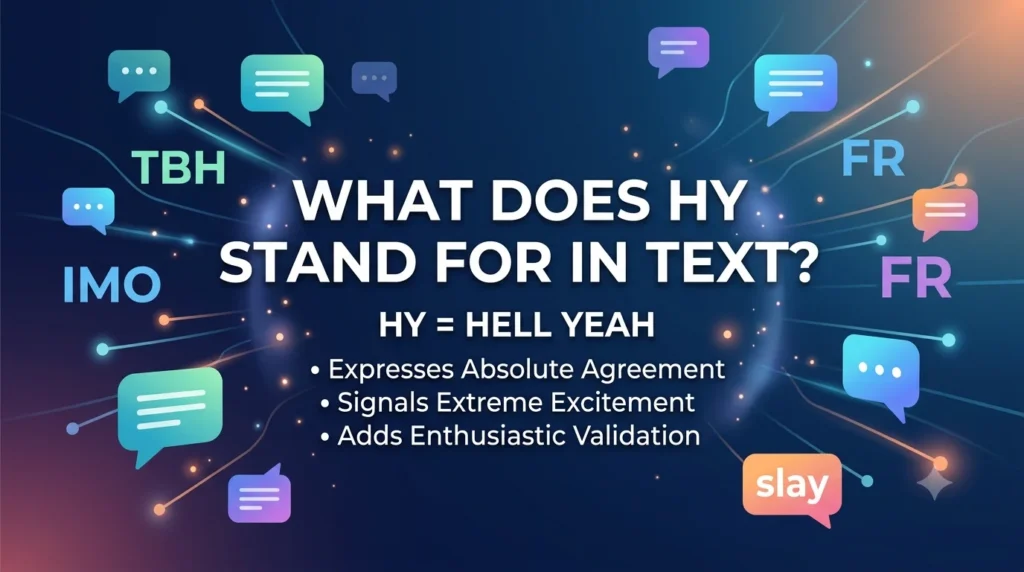
What Does HY Stand For in Text? A Quick Meaning
At its absolute center, HY stands for “Hell Yeah.” It serves as an emphatic, high-energy digital exclamation designed to show absolute agreement, excitement, or enthusiastic validation.
Instead of typing out multiple words to show your support, these two letters function as an immediate thumbs-up with an injection of extra personality. It strips away formal conversational stiffness and replaces it with instant enthusiasm.
- It signals complete alignment with a statement, plan, or opinion.
- The acronym can stand completely alone as a one-word answer or lead a longer sentence.
- It operates as a casual, modern substitute for terms like “absolutely,” “definitely,” or “count me in.”
Look at how seamlessly this expressive shorthand fits into standard smartphone message bubbles:
“Are we still hitting up that taco truck for dinner tonight? HY, I’m starving!”
“That new album drop is an absolute masterpiece. HY! I’ve had it on repeat all morning.”
“Did you finally finish that grueling history paper? HY, just turned it in!”
Origin, Background, and the Rise of Two-Letter Slang
The spoken phrase “hell yeah” has been an anchor of casual, informal English for decades, popularized across pop culture, music, and sports entertainment.
The Evolution of Mobile Keyboards
When internet communication shifted from desktop chatrooms to instant mobile messaging, speed became the ultimate priority for young texters. While traditional shortcuts like “LOL” or “BRB” paved the way, typing full expressions still felt too slow during rapid-fire exchanges.
To keep up with the real-time rhythm of text conversations, users began aggressively condensing common colloquial phrases into simple two-letter combos. This specific term emerged as a fast, low-effort method to express raw excitement without clicking multiple keys.
The Amplification of Social Video Platforms
With the explosive growth of platforms like TikTok and Instagram Reels, short captions required maximum emotional impact using minimal screen space. Creative internet users quickly adopted the abbreviation to punctuate their videos with an authentic, relatable attitude.
Over the past few years, the term successfully transitioned out of niche subcultures and into the mainstream global vocabulary of everyday smartphone users.
Real-Life Conversations: Relatable Examples
Observing how these two letters function across different platforms helps clarify their conversational weight, emotional placement, and overall rhythm.
WhatsApp Message Thread
Person A: Hey, a few of us are planning a weekend beach trip next month. Do you think you can clear your schedule to join us?
Person B: HY! I desperately need a break from this office cubicle. Let me know the exact dates.
Instagram DMs
Person A: Sends a link to an upcoming concert announcement for a favorite indie band.
Person B: HY, we are absolutely buying those presale tickets tomorrow morning! No matter what!
TikTok Comments Section
Person A: Is anyone else completely obsessed with iced coffee even when it is freezing outside?
Person B: HY 😭 My hands are literally numb right now but I am still drinking it.
Standard Text Messages Between Friends
Person A: The teacher just texted the group chat saying the morning lecture is officially cancelled.
Person B: HY, I am sliding right back under my covers for another hour of sleep.
The Emotional and Psychological Meaning of the Acronym
Digital communication forces us to translate complex inner feelings into flat text, turning slang into a powerful vehicle for psychological projection.
The Subconscious Need for High-Energy Validation
We utilize this specific slang term because standard affirmative answers like “yes” or “ok” often feel cold, indifferent, or completely detached in a casual chat setting. If a friend asks if you are excited about a party, replying with a simple “yes” can unintentionally signal boredom.
Dropping these two letters instantly injects warm, human energy into the dialogue, assuring the other person that you share their excitement completely. It provides a quick burst of social validation that helps strengthen the emotional bond between screens.
An Educator’s Perspective on Shorthand
During a group community project I supervised last semester, one of the student team leaders texted their group channel saying, “HY, we crushed that presentation!” A few traditional observers might have initially viewed the phrase as slightly unrefined for an academic environment.
However, I recognized it as a genuine, unfiltered expression of shared relief and pride among peers who had worked tirelessly for weeks. It reminded me that modern shortcuts are not degrading our language; rather, they are allowing young people to express authentic human joy in their own distinct voice.
Usage in Different Contexts
Recognizing the subtle boundaries of your social environment is essential to ensuring your written texts always leave the right impression.
Public Social Media Platforms
On apps like Twitter or TikTok, this abbreviation is highly effective for showing immediate agreement with trending opinions or viral memes. It allows you to blend naturally into fast-moving digital commentary sections while keeping your tone entirely modern.
Close Friends and Casual Relationships
Within your inner circle, the acronym acts as a comfortable staple that keeps conversations light, energetic, and completely unpretentious. It acts as a reliable green light for making plans or validating a friend’s exciting personal news.
Professional Workplace Environments
Using this specific shortcut in a corporate email or on an official workplace message platform like Slack is a significant mistake. Because the abbreviation contains an underlying mild profanity, it can easily make you look unprofessional, sloppy, or overly familiar to management.
Casual vs. Serious Tones
The visual formatting you choose completely changes how a recipient processes your reply. Keeping the term lowercase feels smooth, breezy, and relaxed, while writing it in bold uppercase signals a loud, ecstatic shout of pure joy.
When You Should Keep This Term Out of Your Chats
While highly functional for showing casual excitement, there are clear social situations where this shortcut can cause unwanted friction.
Navigating Serious and Delicate Situations
If someone is sharing a vulnerable story about a difficult life challenge or a frustrating personal issue, do not use this acronym. Dropping high-energy street slang into a sensitive conversation can make you appear emotionally tone-deaf, self-absorbed, or deeply dismissive.
Intergenerational Family Group Chats
When messaging older relatives, mentors, or individuals from highly formal cultural backgrounds, it is best to stick to traditional language structures. They might easily misinterpret the underlying word as genuine vulgarity rather than a harmless expression of agreement.
Common Misunderstandings and Tone Confusion
Linguistic cross-firing is a frequent issue when using highly compressed text shortcuts that carry multiple potential meanings.
Confusing It with Alternative Meanings
The most common misunderstanding occurs when a recipient unfamiliar with internet culture mistakes the letters for a completely different phrase. Some individuals might initially read it as a typo for “hey” or confuse it with corporate acronyms like “High Yield.”
The Problem of Literal Interpretation
Occasionally, an individual might read the letters and focus heavily on the literal profanity rather than the figurative enthusiasm. Ensuring your message features clear context clues helps prevent your positive energy from being misread as aggressive language.
Evaluating Similar Conversational Intensifiers
Contrasting this abbreviation with other popular digital expressions makes it much simpler to pick the absolute best term for your daily chats.
| Slang Term | Core Spoken Meaning | Energy Level | Best Text Setting |
| HY | Hell Yeah | Very High / Enthusiastic | Celebrating plans, agreeing with friends |
| FR | For Real | Medium / Sincere | Validating serious news, confirming facts |
| IKR | I Know, Right? | Moderate / Shared | Echoing a common opinion or complaint |
| YFG | You’re Forgiven | Low / Neutral | Resolving a minor misunderstanding |
| OF C | Of Course | High / Standard | Assuring someone with polite certainty |
Key Insight
Mastering digital literacy isn’t about using every piece of slang simultaneously; it is about choosing the precise term that matches the emotional climate of your conversation.
Variations and Typographical Twists of the Slang
Digital speakers constantly adjust the visual presentation of their acronyms to communicate subtle shifts in tone, speed, or volume.
hy (Lowercase)
The ultimate standard for casual, low-effort texting, signaling smooth agreement without making the text feel overly dramatic.
HY (All Caps)
Turning on caps lock mimics a loud, ecstatic cheer in real life, typically deployed when celebrating major personal victories or incredible news.
hyyy
Elongating the vowel at the end mimics a long spoken drawl, indicating that you are extremely hyped or completely on board with a plan.
hy!
The inclusion of a single exclamation point grounds the acronym with a clean, punctuation-focused punch of genuine excitement.
hy man
Adding a casual noun at the end emphasizes a strong sense of camaraderie, keeping the dialogue grounded, warm, and friendly.
hy lol
Pairing the letters with a quick laugh ensures the overall tone remains entirely playful, lighthearted, and completely stress-free.
hy ready
A common conversational phrase combination used to show that you are entirely prepared and enthusiastic about an upcoming event.
H.Y.
Using periods between the letters is a rare variation mostly utilized by older text users attempting to follow formal grammatical rules.
How to Respond When Someone Sends You “HY”
Your reply should comfortably reflect the positive momentum of the message, keeping the natural flow of your chat moving forward smoothly.
Casual Replies
- “Awesome, I’ll send over the exact address in a few minutes!”
- “Glad we are completely on the same page about this.”
Funny Replies
- “That’s the exact energy I needed to see on my screen today! 😂”
- “Love the enthusiasm, let’s try not to break anything this time!”
Mature Replies
- “I am really glad to hear you are feeling so positive about this project.”
- “It sounds like great news. Let’s touch base later to finalize the details.”
Respectful Replies
- “Thank you for the quick validation. I truly appreciate your support on this matter.”
- “I am pleased that you agree. Let’s proceed with the plan as we discussed.”
Regional, Cultural, and Generational Dynamics
The way these two letters are interpreted can shift noticeably based on geography, cultural backgrounds, and age brackets.
Western vs. Global Internet Spheres
In American digital spaces, the phrase is a massive staple of casual text culture and rarely turns heads. However, in regions where English is spoken as a secondary language, users generally prefer traditional terms to ensure absolute clarity.
The Generational Divide: Millennials vs. Gen Z
Millennials typically deploy this shortcut with complete sincerity when they are genuinely excited about making social plans. Gen Z users often wrap the acronym in layers of irony, using it to playfully exaggerate their reactions to completely ordinary daily situations.
Is It Safe for Kids to Use?
For parents tracking the safety of modern online acronyms, this term occupies a relatively mild middle ground. While it does technically mask a minor profanity, younger users almost never deploy it with malicious intent, anger, or aggressive bullying behavior.
Instead of enforcing a strict ban that might create a communication gap with your child, treat its appearance as a great teaching opportunity. Discuss the vital importance of situational awareness, helping them understand why casual street expressions are great for friend chats but completely improper for school assignments.
Frequently Asked Questions
What does the slang term HY mean when texting?
It stands for “Hell Yeah,” functioning as a high-energy exclamation to show absolute agreement, excitement, or enthusiastic validation.
Is using HY considered rude or vulgar?
Among close friends and peers, it is viewed as entirely harmless. However, due to the underlying mild profanity, it can look rude or unprofessional in formal, academic, or corporate settings.
What is the difference between HY and FR?
“HY” is specifically used to show enthusiastic agreement or excitement about a future event, whereas “FR” stands for “For Real” and is used to confirm sincerity or truth.
Can I include this abbreviation in a message to my boss?
No, it is highly recommended to keep your workplace communications clean, formal, and completely free of casual street slang terms.
Why do people type hy instead of yes?
Typing the shortcut allows people to match the rapid, spontaneous rhythm of real-life spoken conversation while injecting extra personality into a silent screen.
Conclusion: Honoring the Living Rhythm of Digital Connection
Language is not a cold, rigid set of rules meant to stay trapped in a textbook; rather, it is a living reflection of how we share our human experiences. Slang terms like this one aren’t running down our communication skills. Instead, they give us a creative way to project warmth, joy, and validation through a silent piece of glass. By taking the time to learn these modern textual patterns, you ensure your interactions remain authentic, supportive, and grounded. Never hesitate to learn the changing rhythms of the digital world—it is the ultimate way to keep your human connections beautifully real.