Have you ever looked at your phone screen and felt a sudden wave of confusion over a simple chat? You are not alone. Modern messaging moves at lightning speed, leaving many people scrambling to decode everyday text abbreviations.
One phrase that frequently trips up international users and language learners is the acronym “WBU.” If you have ever searched for “wbu significato” or wondered why your global friends keep typing it, this guide is for you.
We live in a hyper-connected world where digital shorthand bridges cultures. Understanding these subtle linguistic cues prevents awkward silences and keeps your conversations flowing naturally.
WBU Significato – Quick Meaning
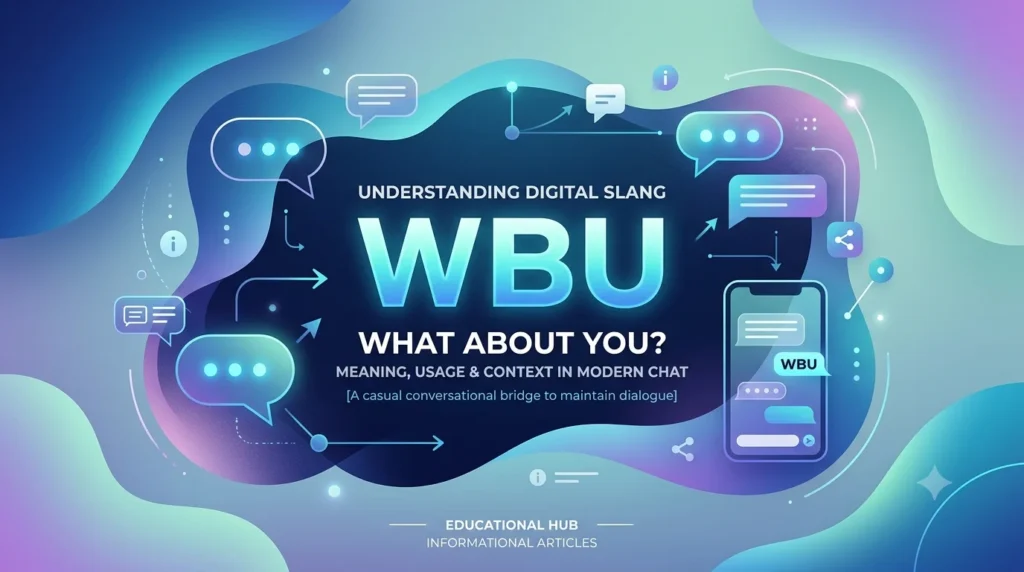
At its core, WBU stands for “What About You?” It is a casual, conversational bridge used to redirect a question back to the person you are chatting with.
In Italian, the direct translation or significato of WBU is “E tu?” or “Che mi dici di te?” It serves as an effortless tool for maintaining balance in digital dialogue.
“Hey, I’m just heading out to grab some iced coffee. WBU?”
“Man, this exam season is absolutely brutal. WBU?”
“I think I’m going to stay in and watch a movie tonight, WBU?”
The Core Essentials of WBU
- Primary Meaning: What About You?
- Italian Equivalent: E tu? / Cosa mi racconti di te?
- Tone: Casual, informal, and deeply collaborative.
Origin & Background
The digital space has always demanded speed. To understand how WBU became a global staple, we have to look back at the early days of internet communication.
Where It Came From
The phrase emerged during the late 1990s and early 2000s. Text messaging was limited by strict character counts, and typing on a numeric keypad was incredibly tedious.
Cultural Influence and Social Media Impact
As AOL Instant Messenger (AIM) and MSN Messenger took over the world, brevity became an art form. Over the years, platforms like Twitter, Instagram, and WhatsApp solidified WBU as a permanent fixture of global text culture.
How the Meaning Evolved
Initially born out of technical necessity, the acronym transitioned into a stylistic choice. Today, younger generations use it not just to save time, but to project an aura of effortless chill.
Real-Life Conversations
Seeing slang in isolation rarely helps you master it. Let’s look at how this abbreviation functions across different contemporary social platforms.
WhatsApp Text
Person A: Just finished my workout for the day. Feeling great!
Person B: Nice! I’ve been lazy all morning tbh. WBU?
Person A: Honestly, just relaxing now. You should hit the gym later!
Instagram DMs
Person A: That new track by Travis Scott is an absolute banger.
Person B: Right?! I’ve had it on repeat for three hours. WBU?
Person A: Same here, my neighbors are probably sick of it by now haha.
TikTok Comments
Person A: I literally cannot stand people who chew loudly 🙄
Person B: Big facts. That’s my biggest pet peeve. WBU?
Person A: Walking slowly in front of me is a close second!
Standard iMessage
Person A: Hey, are we still on for dinner at 8?
Person B: Yeah, looking forward to it. I’m free whenever. WBU?
Person A: Perfect, wrapping up work now. See you soon!
Emotional & Psychological Meaning
Linguistics isn’t just about definitions; it’s about human connection. When someone types those three letters, they are doing more than saving keystrokes.
What Emotion It Expresses
WBU signals active listening and genuine empathy. It shows that the speaker does not want the conversation to be a one-sided monologue.
Why People Use It
It offers a low-pressure way to show interest. By tossing the conversational ball back to you, the speaker invites you to share your universe without putting you on the spot.
What It Reveals About Modern Communication
We crave connection but have shorter attention spans. Abbreviations like this prove that humans can express warmth, curiosity, and social etiquette in just a few taps.
A Personal Reflection on Digital Warmth
I remember chatting with a colleague from Milan who was practicing her casual English. She told me she felt uncomfortable using abbreviations because they felt cold.
Once she realized that typing “WBU” actually made her text sound warmer and more inclusive to native speakers, her confidence skyrocketed. It transformed her digital presence from stiff to welcoming.
Usage in Different Contexts
Context changes everything in language. A phrase that works perfectly with your best friend can completely backfire in a different setting.
Social Media
On public forums, the phrase acts as a tool for high engagement. Creators use it in captions to encourage followers to leave comments and share their own stories.
Friends & Relationships
In intimate dynamics, it keeps the banter alive. It shows your partner or friend that you value their perspective as much as your own.
Work / Professional Settings
Be highly cautious here. Using this abbreviation in an email to your boss or a client can look unprofessional, sloppy, or overly detached.
Casual vs. Serious Tone
The phrase belongs firmly in casual spaces. If a friend is opening up to you about a deep personal loss, replying with a shorthand acronym will feel dismissive and emotionally distant.
When NOT to Use It
Knowing when to stay silent or use full sentences is a true sign of digital literacy.
Inappropriate Contexts
Avoid using acronyms during formal evaluations, academic papers, or legal correspondence.
Cultural Sensitivity
Some older generations or non-native speakers might not recognize the term. Using it can create unnecessary barriers or make the other person feel excluded from the loop.
Situations Where It May Cause Misunderstanding
If an ongoing discussion is emotionally charged or tense, using casual text slang can imply that you aren’t taking the matter seriously. Always prioritize clarity over speed when feelings are on the line.
Common Misunderstandings
Even simple terms get misinterpreted. Let’s clear up the confusion around this specific internet staple.
What People Get Wrong
Some individuals mistake WBU for a demand for information. In reality, it is simply a gentle, open-ended invitation to speak.
Tone Confusion
Because text lacks vocal inflection, a flat “WBU” can sometimes read as dismissive if it stands entirely alone. Adding an emoji can instantly soften the delivery.
Literal vs. Figurative Meaning
While it literally asks “what about you,” it figuratively means “I care about your input, please share your thoughts with me.”
Digital Slang Comparison
To fully grasp the landscape of online communication, it helps to see how similar expressions stack up against each other.
| Expression | Full Form | Best Used For | Tone Level |
| WBU | What About You? | Checking in on someone’s current state or opinion. | Casual & Warm |
| HBU | How About You? | Virtually identical to WBU; interchangeable. | Casual & Warm |
| WYD | What You Doing? | Asking for someone’s immediate physical activity. | Direct & Informal |
| HRU | How Are You? | A general wellness check, less about trading opinions. | Friendly |
Key Insight
Choosing between WBU and HBU comes down to pure personal preference; both terms achieve the exact same social result of shared engagement.
Variations / Types of Chat Slang
The digital lexicon is vast. Expanding your vocabulary helps you navigate different online communities with absolute ease.
HBU (How About You)
This variation is the closest sibling to WBU. It functions the exact same way and can be swapped out without changing the vibe.
WYD (What You Doing)
A more direct query focused on actions rather than thoughts. Use this when you want to know if someone is free to hang out.
NM JC (Nothing Much, Just Chilling)
The ultimate classic response to a casual check-in. It sets a relaxed, low-stakes mood for the rest of the conversation.
TTYL (Talk To You Later)
A polite way to wrap up a chat session. It ensures the other person knows you aren’t ignoring them; you are just busy.
BRB (Be Right Back)
Perfect for when you need to step away from your device for a moment. It keeps the conversational flow paused but intact.
IDK (I Don’t Know)
Expresses uncertainty without dragging out the sentence. It keeps the interaction moving quickly when answers are scarce.
IMO (In My Opinion)
Prefaces a personal thought or view. It helps soften a statement so you don’t sound overly aggressive or preachy.
TBH (To Be Honest)
Signals vulnerability or a straightforward confession. It adds a layer of authenticity to your digital statements.
How to Respond When Someone Uses It
Your reply depends entirely on the energy you want to bring to the interaction. Here are a few ways to structure your response.
Casual Replies
- “Not much, just watching some TV.”
- “Just cooking dinner, honestly.”
Funny Replies
- “Trying to survive this Monday, please send help!”
- “Staring at the wall pretending I’m rich.”
Mature Replies
- “I’m focusing heavily on my current projects this week.”
- “Reflecting on the year and setting some new personal goals.”
Respectful Replies
- “I’m doing well, thank you for asking.”
- “All good here, hope everything is going wonderfully on your end.”
Regional & Cultural Usage
The internet might be global, but geography still shapes how we talk to one another online.
Western Culture
In the US, UK, and Canada, this acronym is incredibly ubiquitous. It is used by almost everyone who sends text messages, from teenagers to working professionals in informal settings.
Asian Culture
In countries like South Korea or Japan, localized platforms like Line or KakaoTalk utilize their own unique sets of character blends or emojis to express mutual interest.
Middle Eastern Culture
English-speaking youth in the region frequently blend Western text slang with Arabic phrases, creating a highly vibrant, multicultural digital dialect.
Global Internet Usage
No matter where you go, English text abbreviations serve as a universal language for the global gaming, tech, and social media communities.
Generational Differences (Gen Z vs. Millennials)
Millennials tend to use punctuation and full capitalization correctly with slang. Gen Z, on the other hand, prefers lowercase letters and often layers the phrase with heavy irony or specific emojis to alter the meaning.
Is It Safe for Kids?
Parents can breathe a sigh of relief. WBU is entirely safe, clean, and free of malicious undertones.
It carries no vulgar, inappropriate, or dangerous double meanings. It is a completely innocent tool for conversational turn-taking that children use to text their peers about school, video games, or daily plans.
FAQs
What does WBU mean in Italian text messages?
It means “E tu?” or “Cosa mi dici di te?” It is used by Italian speakers when chatting with international friends to ask for their opinion or updates.
Is WBU polite to use with a teacher?
No, it is highly informal. You should always use full, grammatically correct sentences when communicating with instructors or supervisors.
What is the difference between WBU and HBU?
There is no functional difference. “What about you” and “How about you” serve the exact same purpose in a digital conversation.
Can I use WBU in a formal email?
It is best to avoid it entirely. Formal emails require professional language to ensure you maintain a respectful and authoritative tone.
Why do people prefer WBU over typing full sentences?
It saves valuable time, keeps the chat dynamic, and creates a relaxed atmosphere that mirrors natural, spoken human conversation.
Conclusion: Embrace the Digital Flow
Mastering internet slang is about more than memorizing letters; it is about embracing how human connection evolves. Phrases like WBU show our collective desire to keep conversations balanced, engaging, and deeply reciprocal.
Now that you know the true meaning and cultural weight behind this common abbreviation, you can use it with absolute certainty. Go ahead and drop it in your next chat to keep the connection alive.