
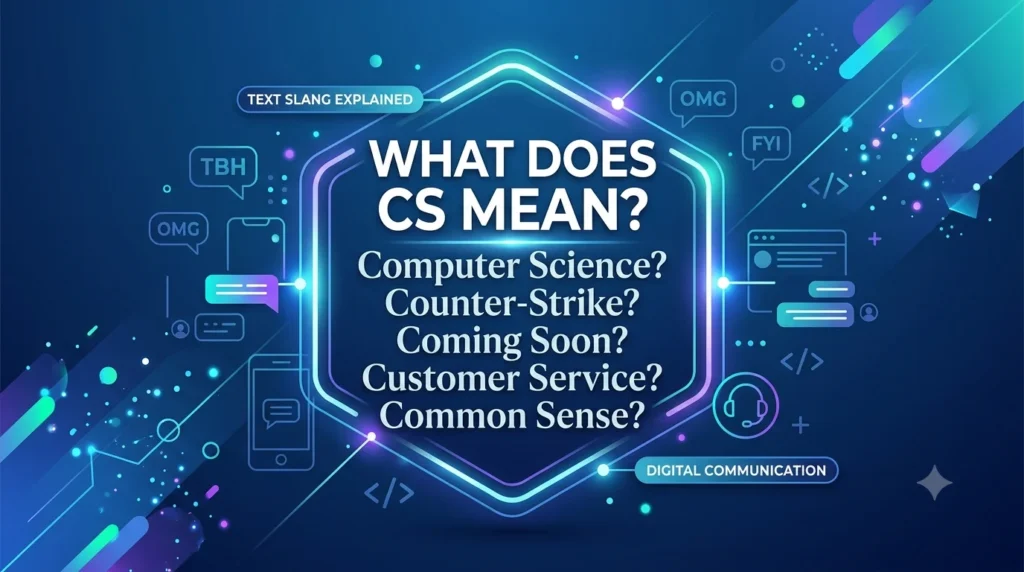
Have you ever scrolled through your feed, glanced at a text message, or read a quick workplace update and paused at those two letters? You are definitely not alone in wondering what they mean.
Language is moving faster than ever, and keeping up can feel like a full-time job. We see these tiny abbreviations pop up everywhere, leaving us to decipher the hidden intent behind them.
Understanding these shortcuts isn’t just about learning internet shorthand. It is about truly connecting with the people on the other side of your screen without losing anything in translation.
The Digital Shorthand Dilemma
Modern communication relies heavily on speed, which frequently strips away our tone of voice, facial expressions, and emotional context. Because of this, a simple two-letter combination can mean something entirely different depending on who sent it.
People frequently search for the true meaning behind these terms because misreading a single text can lead to unnecessary social anxiety or awkward workplace misunderstandings.
When we untangle these linguistic layers, we bridge the gap between confusion and clarity. Let’s look at exactly how this specific abbreviation functions in our daily lives.
it Meaning – A Quick and Clear Breakdown
The beauty of language lies in its flexibility, but that same flexibility is exactly what causes confusion. The abbreviation “it” changes its identity based entirely on the environment you are in.
The Primary Definitions
- Computer Science: The academic and professional study of coding, software, and algorithms.
- Customer Service: The department dedicated to helping clients resolve issues and answer questions.
- Chill Sessions / Casual Space: A modern slang variant used to describe low-key hangouts.
“Hey, are you majoring in it next semester?”
“I need to contact it because my package never arrived.”
“Let’s host a quick it tonight just to catch up on life.”
Origin and Evolution of the Term
The history of this abbreviation tracks perfectly with the rise of modern technology and global corporate culture. It did not just appear overnight; rather, it evolved alongside our need for conversational efficiency.
From Academic Halls to Corporate Boardrooms
Decades ago, the term belonged almost exclusively to universities where early software engineering programs were born. As technology boomed, the shorthand naturally spilled over into the mainstream world.
Simultaneously, the corporate world required a faster way to log internal tickets. Customer support teams began using the acronym in emails to save valuable keystrokes during busy shifts.
The Social Media Shift
With the explosion of platforms like TikTok and Instagram, younger generations adopted the letters to mean something entirely different. It transitioned from a rigid professional term into a fluid lifestyle expression.
Real-Life Conversations
Seeing these letters in a dictionary is one thing, but seeing them live in a chat feed is where the real learning happens. Here are a few common ways this plays out across different platforms.
Scenario 1: The WhatsApp Group Chat
Alex: Are we still studying tonight or what?
Jordan: Yeah, I’m stuck on this CS project. The python code is breaking.
Alex: Oh, true. Let me open my laptop and help you debug.
Scenario 2: Instagram DMs
Maya: Love the outfit you posted! Where is it from?
Brand Account: Hi Maya! Please send a message to our CS team via the link in our bio so they can check stock for you!
Maya: Perfect, doing that right now. Thank you!
Scenario 3: TikTok Comments
User1: This video is so chaotic lol
Creator: Honestly we were just having a mini it in the living room and decided to record it.
User1: Best vibes ever honestly.
Emotional and Psychological Meaning
When someone uses an abbreviation, they are doing more than saving time. Psychologically, shorthand signals a level of comfort, shared knowledge, or belonging within a specific group.
The Subconscious Signals
Using abbreviations creates an instant boundary between those who “get it” and those who do not. It establishes an unspoken bond of shared experience, whether that experience is surviving a tough college major or working a stressful corporate job.
In casual settings, using the term to mean a relaxed hangout implies safety and comfort. It tells the recipient that there is zero pressure to dress up or act formal.
A Reflective Moment
I remember sitting in a chaotic coffee shop a few years ago, desperately trying to finish a project while listening to a student next to me complain about their upcoming exams. They texted a friend, “This CS life is draining me.”
In that single moment, those letters carried an entire weight of exhaustion, ambition, and a deep craving for community. It reminded me that behind every piece of text is a human being trying to express a complex feeling.
Usage in Different Contexts
Navigating the rules of language requires a strong sense of situational awareness. What works perfectly in a group chat might raise an eyebrow during an executive meeting.
Social Media and Online Spaces
On public forums, the term moves incredibly fast. It is almost always used to describe casual hangouts, gaming lobbies, or specific academic communities where everyone already knows the lingo.
Friends and Intimate Relationships
Among close friends, it serves as an invitation to let your guard down. It is an easy, low-stakes way to ask for company without making a grand plan.
Work and Professional Settings
In an office setting, accuracy is everything. Here, the term is strictly functional, referring directly to client support operations or systems engineering tasks.
When NOT to Use It
While shortcuts are incredibly helpful, using them at the wrong moment can make you appear dismissive, unprofessional, or completely out of touch.
⚠️ CRITICAL WARNING: Avoid using vague abbreviations during high-stakes corporate crises or deeply emotional personal conversations.
If a close friend is going through a genuine personal crisis, asking them to come over for a casual hangout using internet slang can feel insensitive. They need your full presence, not a abbreviated invitation.
Similarly, if an angry client is complaining about a major billing error, replying with overly casual internal acronyms will make your brand look careless. Clear, fully spelled-out words build trust when things go wrong.
Common Misunderstandings
The biggest issue with short terms is that they rely heavily on assumptions. If the sender and the receiver are not on the same page, the conversation can stall out quickly.
Literal vs. Figurative Confusion
A student might tell their parent they are focusing on their tech classes, only for the parent to assume they are working a part-time retail job. These small disconnects happen daily.
Tone Deafness
Because abbreviations lack vocal inflection, they can sometimes read as cold or abrupt. If you use them without context, people might think you are intentionally shutting them down.
Comparing Conversational Shortcuts
| Term | Core Meaning | Typical Setting | Tone Level |
| CS | Computer Science / Support / Chill | Academic / Corporate / Casual | Flexible |
| IT | Information Technology | Workplace Technical Support | Formal |
| HQ | Headquarters | Corporate / Operations | Direct |
| BRB | Be Right Back | Texting / Direct Messages | Informal |
Key Insight
The ultimate success of your communication depends entirely on your ability to read the room before you type.
Variations and Contextual Meanings
To help you navigate these waters smoothly, here is a quick-reference list of how these letters morph across different industries.
Computer Science
The academic study of computing systems and programming languages.
Customer Service
The corporate department tasked with assisting clients and maintaining brand loyalty.
Cheat Sheet
A concise set of notes used for quick reference or rapid learning.
Chief of Staff
A high-level corporate executive who manages internal operations and strategy.
Civil Service
Government employment sector focused on public administration and community welfare.
Credit Score
A numerical expression representing a person’s statistical creditworthiness.
Couch Surfing
The practice of traveling cheaply by sleeping on temporary sofas.
Counter-Strike
A highly popular, long-running tactical first-person shooter video game series.
Cents
A basic unit of currency used across various global financial systems.
How to Respond Smoothly
Knowing how to reply when someone drops these letters into a conversation keeps the interaction moving forward naturally.
Casual Responses
- “Sounds good, let me know when you’re free to hang out!”
- “Good luck with that, don’t stare at the screen for too long!”
Funny Responses
- “My brain cells can’t handle any more tech talk today, please translate!”
- “If that means we’re getting snacks, count me completely in.”
Mature and Respectful Responses
- “Thank you for pointing me toward the support team, I appreciate your guidance.”
- “That sounds like a demanding major, I hope your projects are coming along well.”
Regional and Cultural Usage
Geographic locations and generational divides play a massive role in how these letters are interpreted around the world.
Western vs. Eastern Corporate Spheres
In Western business cultures, the term heavily leans toward tech roles or organizational leadership titles. In contrast, many Asian corporate hubs use the term explicitly for external support centers.
Generational Shifts
Gen Z views these letters through a lens of lifestyle, digital gaming, and relaxed social spaces. Millennials and older generations are far more likely to associate them strictly with work, finance, or university degrees.
Is It Safe for Kids?
Parents can breathe a sigh of relief here. The term itself is entirely benign and safe for younger audiences to use.
It carries no inherent hidden dangers, inappropriate double meanings, or toxic associations. It is simply a standard piece of modern digital vocabulary used to navigate everyday topics.
Frequently Asked Questions
Does it always mean something related to computers?
No, it frequently refers to customer support departments or casual social spaces depending on the platform you are using.
Is it professional to use this abbreviation in a business email?
It is acceptable if you are speaking internally to colleagues who use the jargon daily, but you should spell it out completely when emailing external clients.
Why does Gen Z use this term differently than older generations?
Digital spaces move fast, and younger generations naturally repurpose older corporate terms to fit their casual online lifestyles.
How do I know which meaning someone intends?
Look closely at the surrounding conversation; if they mention code, it is tech-related, whereas if they mention orders, it is support-related.
Can this term be used as a verb?
In rare casual gaming or social contexts, people might use it to describe the act of logging into a game or hanging out, though it remains primarily a noun.
Final Thoughts
Language is a living, breathing tool that belongs to the people who use it every day. Embracing these shifts helps us stay connected in an increasingly digital world.
The next time you see these letters flash across your screen, take a quick breath, check the surrounding context, and reply with total confidence. Clear communication is the ultimate superpower.