If you’ve spent any time on social media, messaging apps, or online forums, you’ve probably come across the acronym IDGAF. It appears in tweets, TikTok captions, Instagram comments, text messages, and even everyday conversations.
People often search for “idgaf stands for” because they’re unsure whether it’s a joke, an insult, a sign of confidence, or simply internet slang. The phrase can carry different emotional meanings depending on the situation and the relationship between the people using it.
Understanding what IDGAF means helps avoid confusion and gives valuable insight into how modern digital communication works. In many cases, it reflects frustration, independence, confidence, or emotional detachment.
This guide explains the meaning, origin, emotional significance, real-life examples, cultural context, and proper usage of IDGAF so you can understand it with confidence.
IDGAF Stands For – Quick Meaning
What Does IDGAF Mean?
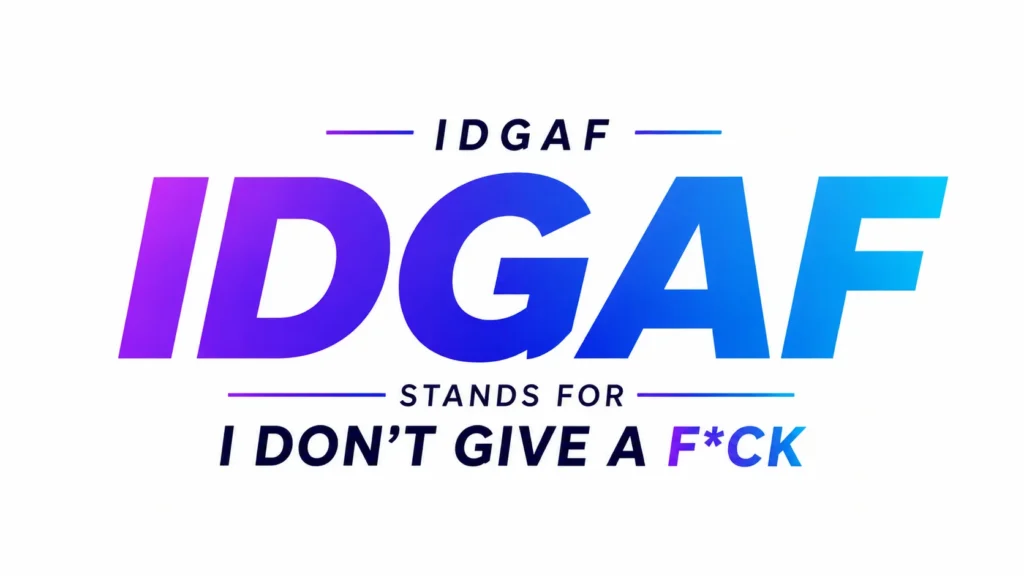
IDGAF stands for “I Don’t Give A F*.”**
It is a slang expression used when someone wants to show that they do not care about a person, situation, opinion, criticism, or outcome.
Common meanings include:
- I don’t care.
- Your opinion doesn’t affect me.
- I’m emotionally detached from this situation.
- I’m done worrying about it.
Quick Examples
“People keep talking about me, but IDGAF.”
“I failed the trend challenge, and honestly IDGAF.”
“They can judge me all they want. IDGAF.”
Although the phrase sounds simple, the emotion behind it can range from confidence to anger depending on the context.
Origin & Background
Where Did IDGAF Come From?
IDGAF developed from the longer phrase “I don’t give a f***,” which has existed in English-speaking cultures for decades. The phrase was originally used in casual speech to express complete indifference toward something.
As texting and internet communication became more common, users began shortening lengthy expressions into acronyms. Eventually, IDGAF became the standard abbreviation.
Influence of Internet Culture
The rise of online communities accelerated the popularity of IDGAF.
Platforms such as:
- Twitter/X
- TikTok
- Snapchat
helped transform the phrase into a recognizable part of internet language.
Evolution of Meaning
Originally, the expression mainly communicated anger or frustration.
Over time, however, people began using it to represent:
- Self-confidence
- Emotional independence
- Personal freedom
- Rejection of social pressure
Today, many users view IDGAF as a mindset rather than simply an expression.
Real-Life Conversations
WhatsApp Conversation
Person A:
“You still care about what those people said?”
Person B:
“Not anymore. IDGAF honestly.”
Person A:
“Good. Focus on yourself.”
Instagram DM Conversation
Person A:
“Your outfit is getting mixed reactions.”
Person B:
“That’s okay. IDGAF. I wore what I liked.”
Person A:
“Fair enough. Confidence wins.”
TikTok Comment Section
Person A:
“People are criticizing your video.”
Person B:
“IDGAF. I had fun making it.”
Person A:
“Keep posting.”
Text Message Conversation
Person A:
“Your ex is talking about you again.”
Person B:
“IDGAF. That chapter is closed.”
Person A:
“Probably the healthiest attitude.”
Emotional & Psychological Meaning
What Emotion Does It Express?
IDGAF often communicates more than simple indifference.
It may express:
- Confidence
- Frustration
- Defiance
- Emotional protection
- Independence
Sometimes people use it because they genuinely do not care.
At other times, they use it because they are trying to convince themselves not to care.
Why People Use It
Modern life exposes people to constant opinions.
Social media creates an environment where everyone can comment, judge, criticize, or compare.
As a result, many individuals use IDGAF as a way of setting emotional boundaries.
What It Reveals About Modern Communication
The popularity of IDGAF reflects a growing desire for personal autonomy.
People increasingly want to show that they are making choices for themselves rather than seeking approval from others.
A Personal-Style Scenario
Imagine spending weeks working on a creative project.
You share it online and receive a mix of praise and criticism.
At first, negative comments bother you. Later, you realize that no matter what you create, some people will dislike it.
At that moment, saying “IDGAF” can represent a shift from seeking validation to trusting your own judgment.
Usage in Different Contexts
Social Media
IDGAF frequently appears in:
- Captions
- Comments
- Memes
- Hashtags
- Viral videos
It often signals confidence and self-expression.
Example:
“Living my life the way I want. IDGAF.”
Friends and Relationships
Among friends, the phrase can be humorous or supportive.
Example:
“People didn’t like my playlist.”
“IDGAF. It was great.”
In relationships, however, the phrase can sound dismissive if directed at someone’s feelings.
Work and Professional Settings
Using IDGAF in professional communication is generally inappropriate.
The phrase contains implied profanity and can appear disrespectful.
Professional alternatives include:
- “I’m not concerned about that.”
- “That doesn’t affect my decision.”
- “I respectfully disagree.”
Casual vs Serious Tone
Casually, IDGAF can sound playful.
In serious conversations, it may sound harsh or confrontational.
Tone matters as much as the words themselves.
When NOT to Use It
Professional Environments
Avoid using IDGAF in:
- Job interviews
- Workplace emails
- Business meetings
- Academic settings
It may damage credibility.
Sensitive Conversations
If someone is sharing emotional concerns, responding with IDGAF can appear insensitive.
Example:
Friend: “I’m struggling with this situation.”
Bad response:
“IDGAF.”
Cross-Cultural Communication
Not everyone understands internet slang.
Using IDGAF with unfamiliar audiences may create confusion.
Family Situations
Older relatives or family members may interpret the phrase as rude rather than humorous.
Common Misunderstandings
People Think It Always Means Confidence
Many users assume IDGAF always signals strength.
In reality, it can also reflect hurt, frustration, or emotional exhaustion.
Tone Gets Lost in Text
Without facial expressions or voice cues, the phrase may seem more aggressive than intended.
Literal vs Figurative Meaning
Most users do not mean they care about absolutely nothing.
Usually, they are referring to a specific issue.
It Can Sound More Offensive Than Intended
Because the phrase contains implied profanity, some people react strongly to it.
Understanding your audience is important.
Comparison Table
| Expression | Meaning | Tone | Strength Level |
| IDGAF | I don’t care at all | Strong | Very High |
| IDC | I don’t care | Neutral | Moderate |
| Whatever | Indifference | Casual | Medium |
| Not bothered | Unconcerned | Polite | Low |
| So what? | Dismissive response | Defiant | Medium |
| No worries | Relaxed attitude | Friendly | Low |
| I care deeply | Opposite meaning | Serious | High |
| It matters to me | Opposite meaning | Thoughtful | Medium |
Key Insight
IDGAF sits at the stronger end of the indifference spectrum. While expressions like “IDC” sound casual, IDGAF communicates a much more forceful emotional stance.
Variations / Types
IDC
Short for “I Don’t Care.”
A softer and more acceptable alternative.
IDRC
Short for “I Don’t Really Care.”
Shows mild indifference.
DGAF
Means “Don’t Give A F***.”
Essentially the same meaning.
IDGAS
Means “I Don’t Give A Sh**.”
Another variation expressing disregard.
Couldn’t Care Less
Traditional phrase showing complete indifference.
Whatever
A casual response that dismisses a topic.
Not My Problem
Indicates a lack of responsibility for a situation.
Zero Fs Given
Popular internet variation suggesting total indifference.
Unbothered
Modern slang for remaining unaffected.
Living Rent Free
Often used when someone appears overly concerned while the speaker remains unaffected.
How to Respond When Someone Uses It
Casual Replies
- “Fair enough.”
- “Do what makes you happy.”
- “I get that.”
Funny Replies
- “That’s some elite-level confidence.”
- “The caring department is officially closed.”
- “Message received loud and clear.”
Mature Replies
- “I respect your perspective.”
- “As long as you’re comfortable with your decision.”
- “That makes sense.”
Respectful Replies
- “I understand how you feel.”
- “Thanks for being honest.”
- “I appreciate your viewpoint.”
Regional & Cultural Usage
Western Culture
In many Western countries, IDGAF is commonly associated with independence and personal freedom.
It is frequently used in entertainment, music, and social media.
Asian Culture
Many Asian societies place greater emphasis on harmony and group relationships.
Because of this, IDGAF may sometimes be viewed as overly direct or disrespectful.
Middle Eastern Culture
In some Middle Eastern settings, strong expressions of indifference may conflict with expectations of politeness and social respect.
Context becomes especially important.
Global Internet Usage
Online culture has made IDGAF recognizable worldwide.
Even people who are not native English speakers often understand its meaning.
Gen Z vs Millennials
Gen Z
- Uses it more casually.
- Often connects it with confidence and authenticity.
- Common in memes and TikTok content.
Millennials
- Typically use it with stronger emotional intent.
- More likely to associate it with frustration or rebellion.
Is It Safe for Kids?
Understanding Age Appropriateness
IDGAF contains implied profanity, even though the words are abbreviated.
Children may encounter it online, especially on social media platforms.
Parents and educators should explain:
- What the acronym means
- Why it can be considered offensive
- When it may be inappropriate to use
Understanding context is more valuable than simply banning the phrase.
FAQs
What does IDGAF stand for in texting?
IDGAF stands for “I Don’t Give A F***.” It expresses strong indifference or lack of concern about something.
Is IDGAF rude?
It can be. Because it contains implied profanity, some people view it as disrespectful or aggressive.
Is IDGAF the same as IDC?
Not exactly. IDC means “I Don’t Care” and is generally softer. IDGAF is stronger and more emotional.
Why do people use IDGAF online?
People use it to show confidence, independence, frustration, or emotional detachment from criticism and opinions.
Can IDGAF be positive?
Yes. In some situations, it represents healthy self-confidence and freedom from unnecessary judgment.
Is IDGAF popular among Gen Z?
Yes. Gen Z frequently uses the term in memes, captions, comments, and casual online conversations.
Should I use IDGAF at work?
No. Professional settings usually require more respectful and formal language.
Conclusion
Understanding what IDGAF stands for goes beyond knowing the words behind the acronym. It offers a glimpse into modern communication, where people often balance confidence, self-expression, and emotional boundaries in fast-moving digital spaces.
Sometimes IDGAF reflects genuine independence. Other times, it reveals frustration, resilience, or a desire to move forward without seeking approval from others.
Like many slang expressions, its meaning depends heavily on context, tone, and audience. Used thoughtfully, it can communicate confidence and authenticity. Used carelessly, it may come across as rude or dismissive.
The key is understanding not only what the phrase means but also how it makes others feel. Once you recognize that balance, you’ll be able to interpret and use IDGAF more confidently in conversations both online a