If you’ve spent any time on TikTok, Instagram, X, or group chats lately, you’ve probably seen someone type “BFFR” in response to a comment, opinion, or story that sounded a little unbelievable.
The phrase has become one of the internet’s favorite ways to call out exaggeration, unrealistic thinking, or obvious nonsense. Yet many people who encounter it for the first time are left wondering what it actually means and whether it’s meant as a joke, criticism, or something in between.
Understanding BFFR meaning in text can help you avoid confusion, interpret online conversations correctly, and communicate more naturally in modern digital spaces.
In this guide, you’ll learn what BFFR means, where it came from, how people use it, and when you should—and shouldn’t—use it yourself.
BFFR Meaning in Text – Quick Meaning
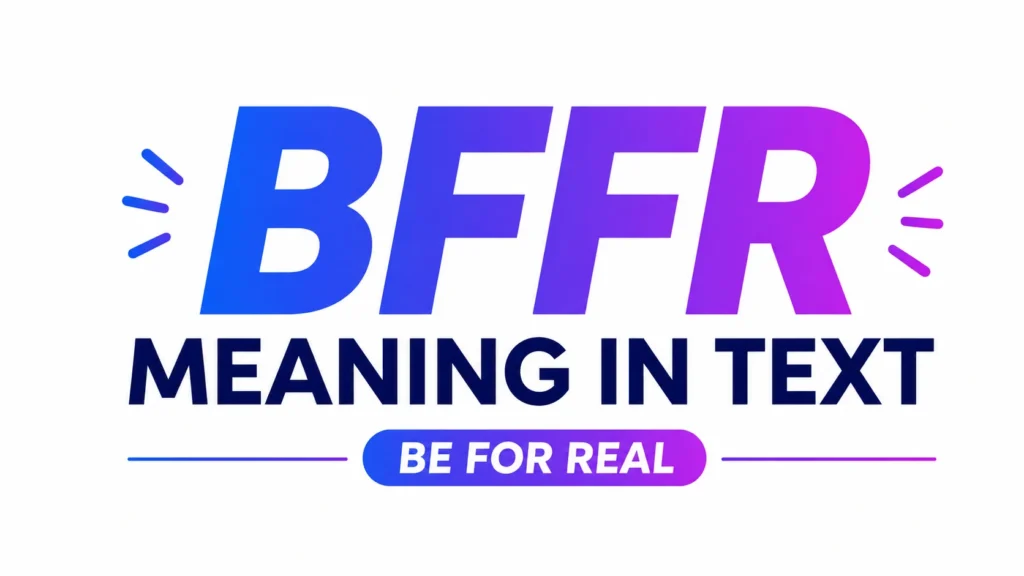
What Does BFFR Mean?
BFFR stands for:
“Be F*ing For Real.”**
It’s a slang expression used when someone believes another person is being unrealistic, dramatic, dishonest, overly optimistic, or simply not making sense.
In simpler terms, it means:
- Be serious
- Stop exaggerating
- Be realistic
- Tell the truth
- Come back to reality
The phrase can be playful among friends or sharp and critical depending on the situation.
Quick Examples
“You think you’ll become a millionaire next week? BFFR.”
“He ignored your texts for two months and now you think he’s changed? BFFR.”
“You’re saying you finished the project in ten minutes? BFFR.”
Origin & Background
Where Did BFFR Come From?
Although the full phrase “Be F***ing For Real” existed in spoken language long before social media, the acronym BFFR gained popularity through internet culture.
People began shortening longer expressions into acronyms to save time while texting. Eventually, BFFR started appearing in tweets, memes, TikTok captions, and comment sections.
Social Media’s Influence
TikTok played a major role in turning BFFR into a viral expression.
Users frequently posted videos reacting to unrealistic relationship expectations, celebrity gossip, questionable life advice, or exaggerated stories. The comment sections quickly filled with people replying:
“BFFR.”
Because the acronym is short, expressive, and memorable, it spread rapidly across platforms.
How the Meaning Evolved
Initially, the phrase was mostly confrontational.
Over time, however, people began using it humorously with friends. Today, it can range from light teasing to serious criticism depending on tone and context.
Real-Life Conversations
WhatsApp Conversation
Person A:
“I think I’ll start studying tomorrow and still get the highest grade.”
Person B:
“BFFR. The exam is in three days.”
Person A:
“Okay, maybe I should start tonight.”
Instagram DM Conversation
Person A:
“He liked my story. I think he wants to marry me.”
Person B:
“BFFR 😂”
Person A:
“Fine, maybe I’m reading too much into it.”
TikTok Comments
Person A:
“Anyone can become famous overnight with zero effort.”
Person B:
“BFFR. Most creators work for years.”
Person A:
“Fair point.”
Text Message Conversation
Person A:
“I’m going to watch one episode and sleep.”
Person B:
“BFFR. We both know you’ll finish the whole season.”
Person A:
“You’re not wrong.”
Emotional & Psychological Meaning
What Emotion Does It Express?
BFFR usually communicates:
- Disbelief
- Frustration
- Skepticism
- Reality-checking
- Playful teasing
- Mild annoyance
The speaker is essentially saying, “I don’t think what you’re saying is realistic.”
Why Do People Use It?
Modern communication moves quickly.
Instead of writing a long explanation about why something seems unrealistic, people use BFFR as a shortcut.
It delivers a strong reaction in only four letters.
What It Reveals About Modern Communication
Internet culture values speed, humor, and emotional expression.
BFFR combines all three.
People use it to challenge statements while keeping conversations casual and entertaining.
Personal-Style Scenario
Imagine a friend insists they’re going to learn a new language, start a business, run a marathon, and write a book all within a month.
A playful “BFFR” isn’t necessarily discouragement. Often, it’s a friendly reminder to set realistic expectations.
Usage in Different Contexts
Social Media
On social media, BFFR is often used in:
- Comment sections
- Meme reactions
- Viral debates
- Celebrity discussions
- Trend conversations
It helps users quickly express disbelief.
Friends and Relationships
Friends frequently use BFFR as playful teasing.
Example:
“You think your crush is secretly obsessed with you because they viewed your story?”
“BFFR.”
In relationships, it can be affectionate or sarcastic depending on tone.
Work and Professional Settings
BFFR is generally inappropriate in professional communication.
Using internet slang with coworkers, clients, managers, or business partners may appear disrespectful.
Instead, use phrases like:
- Let’s be realistic.
- That’s unlikely.
- We should reconsider that assumption.
Casual vs Serious Tone
Casual use often feels humorous.
Serious use can sound dismissive or critical.
The difference depends on:
- Relationship between speakers
- Context
- Platform
- Existing conversation tone
When NOT to Use It
Professional Environments
Avoid using BFFR in:
- Work emails
- Business meetings
- Client communication
- Academic discussions
Professional alternatives are usually better.
Sensitive Situations
People discussing:
- Grief
- Mental health struggles
- Family problems
- Financial hardships
may interpret BFFR as insensitive.
Cultural Differences
Not everyone understands internet slang.
Using it with someone unfamiliar with online culture may create confusion.
Potential Misunderstandings
Because BFFR can sound harsh, it may accidentally offend people who were being sincere.
Common Misunderstandings
People Think It’s Always Rude
Not necessarily.
Among close friends, it is often playful and humorous.
People Assume It Means Lying
BFFR doesn’t always accuse someone of lying.
Sometimes it simply suggests they’re being unrealistic.
Tone Is Frequently Misread
Text messages lack facial expressions and vocal cues.
As a result, one person may see BFFR as funny while another views it as insulting.
Literal vs Figurative Meaning
Literally, it means “Be F***ing For Real.”
Figuratively, it often means:
“Think about what you’re saying.”
Comparison Table
| Expression | Meaning | Tone | Similarity to BFFR |
| BFFR | Be realistic | Direct | Exact |
| Be serious | Stop joking | Neutral | High |
| Come on now | That’s unrealistic | Casual | High |
| No way | Disbelief | Mild | Medium |
| You’re kidding | Doubt | Friendly | Medium |
| Seriously? | Questioning | Neutral | Medium |
| That’s realistic | Agreement | Positive | Opposite |
| I believe you | Acceptance | Positive | Opposite |
Key Insight
BFFR stands out because it combines disbelief, criticism, humor, and reality-checking in a single expression. Few slang terms communicate all of those meanings so efficiently.
Variations / Types
BFFR Bestie
A friendly version used among close friends.
BFFR Please
Adds extra emphasis and disbelief.
BFFR Though
Used when challenging someone’s opinion.
BFFR Girl
Common in social media conversations.
BFFR Bro
Popular among younger users and gaming communities.
BFFR Seriously
Adds stronger skepticism.
BFFR Right Now
Suggests immediate reality-checking.
BFFR For A Second
Invites someone to think realistically.
BFFR Y’all
Often seen in group discussions online.
BFFR Honestly
Used when expressing frustration with a claim.
How to Respond When Someone Uses It
Casual Replies
- “Okay, fair enough.”
- “You got me there.”
- “Maybe you’re right.”
Funny Replies
- “Let me stay delusional in peace.”
- “Reality is overrated.”
- “I reject your facts.”
Mature Replies
- “That’s a fair point.”
- “I can see why you’d think that.”
- “Maybe I should reconsider.”
Respectful Replies
- “Thanks for being honest.”
- “I understand your perspective.”
- “I’ll think about it.”
Regional & Cultural Usage
Western Culture
In North America and much of Europe, BFFR is widely understood among younger internet users.
It often appears in memes, reaction videos, and social media debates.
Asian Culture
Awareness varies significantly.
English-speaking internet users generally understand it, while others may not recognize the acronym immediately.
Middle Eastern Culture
Among younger, digitally active audiences, BFFR appears regularly in English-language social media conversations.
Usage remains less common among older generations.
Global Internet Usage
The internet has transformed BFFR into a globally recognized slang term.
TikTok and Instagram have accelerated its spread across countries and cultures.
Generational Differences
Gen Z
- Uses it frequently
- Understands nuances
- Often employs it humorously
Millennials
- Usually recognize it
- May use it occasionally
- Often prefer full phrases
Older generations may need explanations when encountering it.
Is It Safe for Kids?
Understanding the Context
BFFR itself is generally not harmful.
However, because it contains an abbreviation of a phrase with profanity, parents and educators should understand its origin.
Most teenagers use it as a casual expression meaning “be realistic.”
The key concern is context.
Used playfully among friends, it is usually harmless. Used aggressively, it can contribute to negative interactions or online bullying.
Teaching children about respectful communication remains more important than focusing on the acronym itself.
FAQs
What does BFFR mean in texting?
BFFR means “Be F***ing For Real.” It is used to tell someone to be realistic, honest, or serious.
Is BFFR rude?
It can be. The tone depends on the relationship and context. Among friends, it is often playful. In arguments, it may sound harsh.
Is BFFR popular on TikTok?
Yes. TikTok helped make the acronym widely popular through comments, reaction videos, and memes.
Can I use BFFR at work?
Generally no. Professional environments usually require more formal language.
Does BFFR mean someone is lying?
Not always. It often suggests someone is being unrealistic rather than dishonest.
What age group uses BFFR the most?
Gen Z users are currently the most frequent users of the term.
Is BFFR positive or negative?
It can be either. Some people use it jokingly, while others use it to criticize or challenge a statement.
Conclusion
Understanding BFFR meaning in text goes beyond simply knowing what the letters stand for. The expression reflects a broader trend in modern communication where people use short, emotionally expressive phrases to challenge unrealistic ideas, react to surprising claims, and inject humor into conversations.
Whether you encounter it in a TikTok comment section, an Instagram DM, or a group chat with friends, the meaning usually comes down to one simple message: “Be realistic.”
Like many internet expressions, context matters. Used playfully, BFFR can create connection and laughter. Used carelessly, it can sound dismissive or rude.
Once you understand the tone behind it, you’ll be able to recognize it instantly and use it confidently when the situation calls for a reality check.