If you’ve spent any time texting, scrolling through social media, or chatting online, you’ve probably seen someone write “TYSM.” At first glance, it might look like a random collection of letters. However, for millions of internet users, it’s a quick and meaningful way to express appreciation.
People often search for “what does tysm mean” because they encounter it in messages, comments, gaming chats, or social media conversations and aren’t sure how to interpret it. While the abbreviation is simple, understanding its emotional tone and proper usage can help avoid confusion.
In today’s fast-paced digital world, abbreviations save time while still conveying feelings. TYSM is one of the most common examples. This guide explains its meaning, origin, usage, emotional impact, and much more.
TYSM Meaning – Quick Meaning
What Does TYSM Stand For?
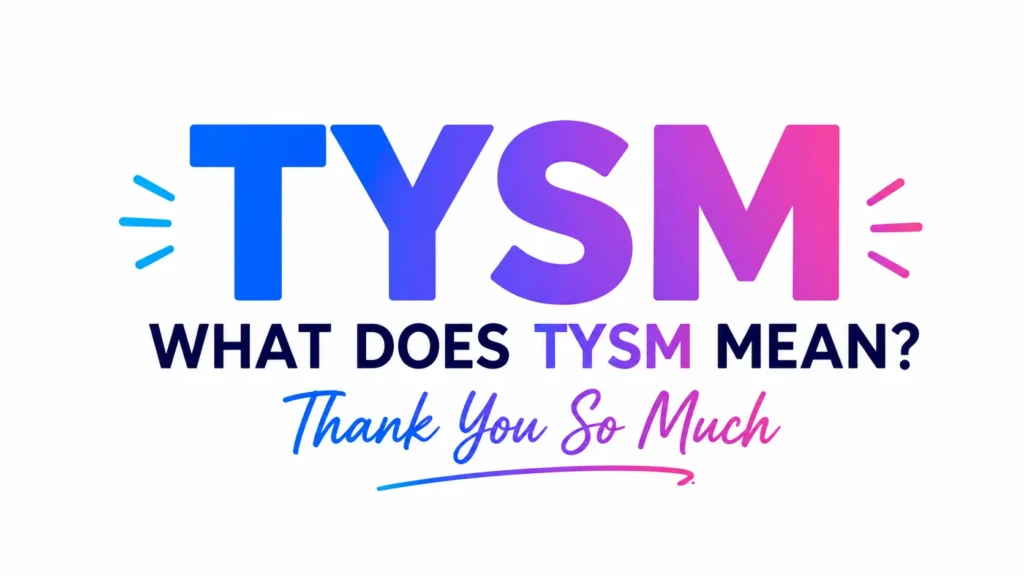
TYSM stands for:
“Thank You So Much.”
It’s a shorthand expression used to show gratitude, appreciation, or heartfelt thanks in digital communication.
Quick Definition
- TYSM = Thank You So Much
- Used in texts, chats, comments, and social media
- Expresses sincere appreciation
- Usually informal but friendly
- Common among teens, young adults, and online communities
Simple Examples
“TYSM for helping me with my homework.”
“I got the package. TYSM!”
“TYSM, you made my day.”
In each example, the abbreviation communicates gratitude quickly while maintaining a warm tone.
Origin & Background
How TYSM Started
TYSM emerged during the rise of online messaging and text communication in the early 2000s. As SMS messaging became popular, users looked for ways to shorten common phrases to save characters and typing time.
Just as “LOL” replaced “laughing out loud” and “BRB” replaced “be right back,” TYSM became a convenient replacement for “thank you so much.”
Influence of Internet Culture
Online communities helped spread TYSM rapidly. Chat rooms, forums, multiplayer games, and social networking platforms encouraged shorter forms of communication.
As internet culture evolved, people increasingly preferred abbreviations that conveyed emotions efficiently.
Social Media’s Role
Platforms like Instagram, TikTok, Snapchat, and X accelerated the popularity of TYSM. Users often need quick responses when interacting with large numbers of people.
Instead of typing a full sentence repeatedly, many choose TYSM to express gratitude instantly.
How Its Meaning Evolved
Although TYSM originally meant simple thanks, it now often carries additional emotional weight.
Depending on context, it can express:
- Deep appreciation
- Excitement
- Relief
- Affection
- Friendly warmth
Real-Life Conversations
WhatsApp Conversation
Person A: I sent you the notes from today’s lecture.
Person B: TYSM! I missed class because of my appointment.
Person A: No problem at all.
Instagram DM
Person A: Your recommendation was amazing. I loved that restaurant.
Person B: Glad you enjoyed it!
Person A: TYSM for suggesting it.
TikTok Comments
Person A: Here’s the tutorial everyone requested.
Person B: TYSM! I’ve been looking for this forever.
Person A: Happy it helped.
Text Message
Person A: I picked up your medicine on my way home.
Person B: TYSM. That saved me a trip.
Person A: Anytime.
Emotional & Psychological Meaning
More Than Just Thank You
Although it is technically an abbreviation, it often carries genuine emotion.
People use it when a simple “thanks” doesn’t feel strong enough. The added words “so much” emphasize deeper appreciation.
Why People Use It
Modern communication moves quickly. People want to express feelings without typing lengthy messages.
TYSM offers the perfect balance:
- Fast to type
- Easy to understand
- Emotionally warm
- Socially acceptable
What It Reveals About Modern Communication
Digital conversations often rely on shorthand expressions. These abbreviations help maintain emotional connection despite the lack of face-to-face interaction.
it shows how people adapt language to preserve warmth in fast-moving conversations.
A Personal-Style Scenario
Imagine spending hours helping a friend prepare for an important exam. Later that evening, you receive a message saying:
“TYSM. I couldn’t have done it without you.”
Even though the message is short, the appreciation feels sincere and meaningful.
Usage in Different Contexts
Social Media
On social media, TYSM commonly appears in:
- Comments
- Replies
- Direct messages
- Community discussions
Creators often receive TYSM messages from followers who appreciate content or advice.
Friends and Relationships
Among friends, TYSM feels casual and friendly.
Examples include:
- Thanking someone for support
- Appreciating a favor
- Acknowledging a thoughtful gesture
Work and Professional Settings
Professional communication requires caution.
While it may be acceptable in casual workplace chats, a full “Thank you very much” often appears more professional in formal emails.
Casual vs Serious Tone
it usually creates a relaxed tone.
However, serious situations involving major support or important events may deserve a more detailed expression of gratitude.
When NOT to Use It
Formal Business Emails
Many professional environments expect complete sentences.
Writing “TYSM” to a senior executive or important client may seem overly casual.
Academic Assignments
School papers, reports, and academic submissions generally require formal language.
Sensitive Situations
In emotionally significant moments, a short abbreviation may appear insufficient.
Examples include:
- Condolence messages
- Major life events
- Formal thank-you letters
Cross-Generational Communication
Some older individuals may not recognize internet abbreviations.
Using the full phrase avoids confusion.
Common Misunderstandings
Assuming It’s Always Casual
Some people believe it lacks sincerity because it’s abbreviated.
In reality, many users genuinely mean “thank you so much.”
Confusing Tone
Without facial expressions or vocal cues, recipients sometimes struggle to interpret emotion.
The same TYSM can appear:
- Excited
- Friendly
- Polite
- Sarcastic
Context matters.
Thinking Everyone Understands It
Not all internet users are familiar with texting abbreviations.
This can create occasional misunderstandings.
Literal vs Emotional Meaning
Literally, it means “thank you so much.”
Emotionally, it can communicate gratitude, affection, relief, or appreciation.
Comparison Table
| Expression | Meaning | Tone | Usage |
| TYSM | Thank You So Much | Warm | Informal |
| TY | Thank You | Neutral | Casual |
| Thanks | Appreciation | Friendly | General |
| TIA | Thanks In Advance | Polite | Requests |
| Much Appreciated | Gratitude | Professional | Work settings |
| No Thanks | Refusal | Neutral | Declining |
| You’re Amazing | Praise | Emotional | Personal |
Key Insight
it sits between a simple “thanks” and a heartfelt written message. It combines speed with emotional warmth, making it one of the internet’s most versatile gratitude expressions.
Variations / Types
TY
Simple thank you.
TYVM
Thank you very much.
TYT
Take your time.
THX
Short form of thanks.
THANX
Alternative spelling of thanks.
TYSM!!!
Extra excitement and enthusiasm.
tysm
Lowercase version commonly used in casual chats.
TYSM ❤️
Adds affection and warmth.
TYSM 😊
Expresses friendly gratitude.
TYSM Bestie
Combines appreciation with friendship.
How to Respond When Someone Uses It
Casual Replies
- You’re welcome!
- No problem.
- Anytime.
- Glad to help.
Funny Replies
- I accept gratitude in snacks.
- You’re making me blush.
- My services remain available.
Mature Replies
- Happy I could help.
- It was my pleasure.
- I’m glad things worked out.
Respectful Replies
- You’re very welcome.
- Thank you for your kind words.
- I appreciate that.
Regional & Cultural Usage
Western Culture
TYSM is widely recognized throughout North America and Europe. It commonly appears in texting, gaming communities, and social media interactions.
Asian Culture
Many young internet users understand TYSM through global social platforms. However, local languages often remain dominant in daily communication.
Middle Eastern Culture
The abbreviation appears frequently among English-speaking internet users, especially younger generations active on social media.
Global Internet Usage
Online communities have transformed TYSM into a nearly universal expression of gratitude among English-speaking users.
Generational Differences
Gen Z
Gen Z frequently uses TYSM in daily conversations, comments, and messages.
Millennials
Millennials generally understand the abbreviation and use it comfortably, though some still prefer complete words.
Is It Safe for Kids?
Yes, TYSM is generally safe for kids.
The abbreviation simply means “thank you so much” and contains no offensive, harmful, or inappropriate content.
Parents should still encourage children to understand context and audience. While TYSM works well among friends, full expressions of gratitude may be more appropriate in formal situations.
FAQs
What does TYSM mean in texting?
TYSM means “Thank You So Much.” People use it to express gratitude quickly in messages and chats.
Is TYSM rude?
No. It’s usually considered friendly, polite, and appreciative when used appropriately.
Can adults use TYSM?
Absolutely. Although popular among younger users, adults frequently use TYSM in casual digital communication.
Is TYSM professional?
Not usually. Formal business communication often benefits from writing out the complete phrase.
What is the difference between TY and TYSM?
TY means “thank you,” while TYSM means “thank you so much,” expressing stronger appreciation.
Is TYSM used on TikTok?
Yes. TikTok users commonly use TYSM in comments, replies, and direct messages.
Can TYSM be sarcastic?
Occasionally. Like many expressions, context determines whether it is sincere or sarcastic.
Conclusion
Understanding what it means helps you navigate modern digital communication with confidence. While the abbreviation simply stands for “thank you so much,” its impact often goes beyond those four words.
People use it to express appreciation, kindness, excitement, and genuine gratitude in a quick and convenient way. Whether you encounter it on WhatsApp, Instagram, TikTok, or text messages, you’ll now recognize both its literal meaning and emotional significance.
Language continues to evolve alongside technology, yet the desire to express thanks remains timeless. it is simply a modern way of showing appreciation in a connected world.