
If you spend time on texting apps, social media, gaming chats, or comment sections, you have probably seen the abbreviation “WTH” appear in conversations. Sometimes it shows up during shocking moments. Other times, people use it jokingly with friends. Yet many users still search for the exact “wth full form” because the tone and meaning can change depending on the situation.
In digital communication, short expressions move fast. People want reactions that feel emotional, instant, and expressive. That is why abbreviations like WTH became part of everyday internet language.
However, confusion happens because some people see it as harmless slang while others consider it rude. Understanding the emotional tone behind it matters just as much as knowing the literal meaning.
This guide explains the full form of WTH, where it came from, how people use it online, what emotions it expresses, and when you should avoid using it.
WTH Full Form – Quick Meaning
What Does WTH Stand For?
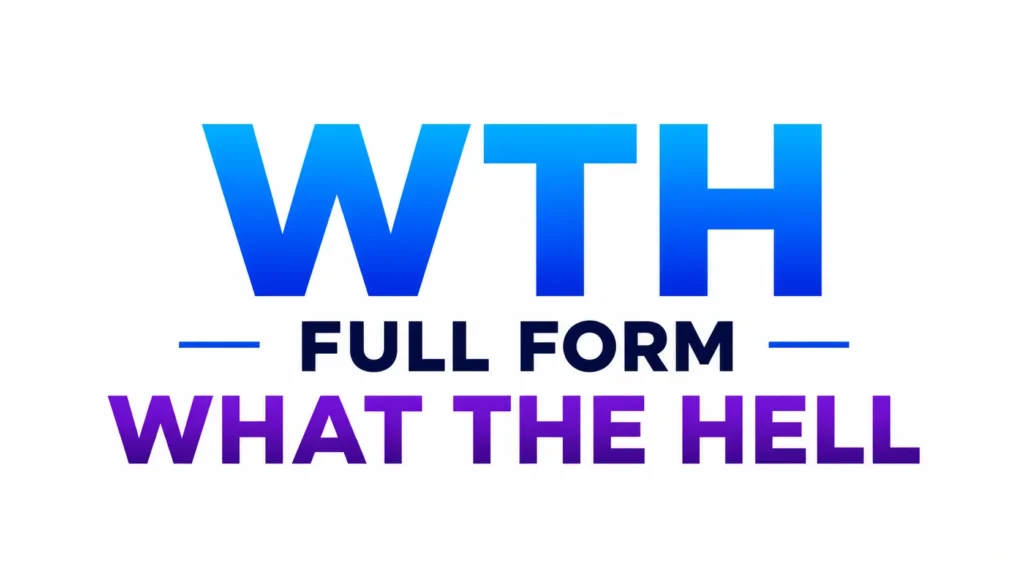
WTH stands for:
- “What The Hell”
- Sometimes interpreted as “What The Heck” in softer conversations
People use it to express:
- Shock
- Confusion
- Frustration
- Surprise
- Disbelief
The phrase is usually typed during emotional reactions when someone cannot believe what they just saw or heard.
Simple Definition
WTH is a casual internet slang expression used when something feels strange, unexpected, annoying, or unbelievable.
Quick Examples
“WTH just happened?”
“WTH are you talking about?”
“I opened the app and WITH… everything disappeared.”
These examples show how flexible the expression is in modern conversations.
Origin & Background
Early Internet Culture
The abbreviation WTH became popular during the early texting and online chatroom era in the late 1990s and early 2000s. Back then, users tried to type faster because SMS messages had character limits.
Short forms like:
- LOL
- OMG
- BRB
- WTF
- WTH
started becoming part of digital communication culture.
WTH emerged as a slightly softer alternative to harsher slang expressions. Many users wanted a reaction phrase that sounded emotional without being too offensive.
Social Media Influence
As platforms like Instagram, Snapchat, TikTok, and Twitter grew, reaction-based communication became more common. People wanted quick emotional responses instead of long sentences.
WTH became useful because it could instantly communicate disbelief or frustration in just three letters.
For example:
- Watching shocking videos
- Seeing unexpected news
- Reacting to relationship drama
- Commenting on viral trends
The phrase naturally fit internet culture.
Evolution of Meaning
Originally, WTH sounded more aggressive because it directly represented “What The Hell.” Over time, younger users softened its meaning.
Today, tone depends heavily on context:
- Friends may use it playfully
- Gamers may use it competitively
- Some users use it sarcastically
- Others use it with genuine anger
That flexibility helped the expression survive across generations.
Read More: JFC Meaning: Means in Social Media, and Everyday Conversations
Real-Life Conversations
WhatsApp Conversation
1st Person:
I accidentally sent my boss the meme meant for you.
2nd Person:
WTH 😭 Did he reply?
1st Person:
He reacted with a thumbs up.
2nd Person:
That somehow makes it worse.
Instagram DM Conversation
Person A:
Did you see her engagement post?
Person B:
WTH already? They started dating like five months ago.
Person A:
I know. Everyone’s shocked.
TikTok Comment Section
Person A:
WTH did I just watch 😂
Person B:
Same. I can’t stop replaying it.
Person C:
This app gets stranger every day.
Text Message Conversation
Person A:
My flight got canceled again.
Person B:
WTH? That’s the third time this week.
Person A:
At this point I’m giving up.
These conversations feel realistic because WTH often appears during emotionally charged moments.
Emotional & Psychological Meaning
What Emotion Does WTH Express?
WTH usually communicates sudden emotional intensity.
Depending on context, it may express:
- Frustration
- Amazement
- Annoyance
- Shock
- Emotional overload
- Disappointment
Unlike formal language, internet slang captures raw reactions quickly. WTH works because it feels spontaneous and emotionally direct.
Why People Use It
Modern communication moves fast. People no longer type long emotional explanations during quick chats.
Instead of saying:
“I am extremely confused and surprised by what just happened.”
someone simply types:
“WTH?”
The emotional meaning still feels clear.
What It Reveals About Modern Communication
Expressions like WTH show how digital communication prioritizes speed and emotional efficiency.
People want to:
- React quickly
- Sound natural
- Show personality
- Match online culture
Short slang terms create emotional connection in fast conversations.
Personal-Style Scenario
Imagine opening your exam portal expecting average grades, then suddenly seeing you scored far higher than expected.
Your first instinct might not be a complete sentence.
You would probably text your friend:
“WTH I actually passed.”
That emotional spontaneity explains why expressions like WTH remain popular.
Usage in Different Contexts
Social Media
On social platforms, WTH appears in:
- Meme reactions
- Viral video comments
- Drama discussions
- Trend reactions
- Celebrity news posts
It adds emotional energy to short comments.
Example:
“WTH is happening on this app today?”
Friends & Relationships
Among close friends, WTH usually feels casual and playful.
Example:
“WTH you scared me for no reason.”
In relationships, tone matters more. Depending on wording, it can sound joking or genuinely upset.
Work & Professional Settings
Using WITH professionally is risky.
Although milder than stronger slang, it still sounds informal and emotional.
Avoid using it in:
- Work emails
- Client communication
- Academic writing
- Professional presentations
Instead, choose calmer alternatives like:
- “That’s surprising.”
- “I’m confused about this.”
- “Could you clarify?”
Casual vs Serious Tone
Tone changes everything.
Casual:
“WTH 😂 that was hilarious.”
Serious:
“WTH is wrong with this system?”
The same abbreviation can feel funny or aggressive depending on punctuation and context.
When NOT to Use It
Professional Environments
Avoid WTH in workplaces where professionalism matters.
Some managers may view it as disrespectful or immature.
Formal Communication
Do not use it in:
- Job applications
- School assignments
- Business meetings
- Official documents
Formal settings require more neutral language.
Sensitive Situations
Using WTH during emotional or serious conversations can sound insensitive.
For example:
- Medical discussions
- Family tragedies
- Personal trauma conversations
In these moments, softer language shows more empathy.
Cultural Sensitivity
Not everyone interprets slang similarly.
Older generations or conservative audiences may find WTH offensive because of its connection to “hell.”
Understanding your audience matters.
Common Misunderstandings
Confusing It With Stronger Slang
Many people assume WHAT is identical to harsher internet abbreviations. In reality, it is usually considered milder.
Still, tone determines how offensive it feels.
Assuming It Always Means Anger
WTH does not always express rage.
Sometimes it shows:
- Excitement
- Humor
- Amazement
- Playful confusion
Literal vs Figurative Meaning
Most users do not think about the literal phrase “What The Hell” anymore.
Instead, they treat WITH as a general emotional reaction.
That shift is common in internet slang evolution.
Comparison Table
| Expression | Meaning | Tone | Common Usage |
| WTH | What The Hell | Mild frustration/surprise | Casual texting |
| WTF | What The F*** | Stronger reaction | Intense emotional response |
| OMG | Oh My God | Surprise/excitement | Friendly reactions |
| Bruh | Disbelief or disappointment | Playful/casual | Meme culture |
| Seriously? | Direct disbelief | Neutral | Everyday conversation |
| No way | Shock or surprise | Friendly | Informal chats |
| What happened? | Request for explanation | Calm | Serious conversations |
Key Insight
WTH survives in modern slang because it balances emotion and social acceptability. It sounds expressive without feeling as extreme as stronger internet abbreviations.
Variations / Types
WTH?!
Strong disbelief or emotional shock.
WTH lol
Confused but amused reaction.
WTH bro
Often used between friends during playful frustration.
WTH happened
Used after unexpected events.
WTH is this
Reaction to something strange or confusing.
WTH man
Mild annoyance toward someone’s actions.
WTH 😂
Humorous disbelief.
WTH seriously
Shows stronger emotional frustration.
WTH omg
Combines shock with emotional excitement.
WTH dude
Casual reaction often used in gaming or friend groups.
How to Respond When Someone Uses It
Casual Replies
- “I know right.”
- “Exactly what I was thinking.”
- “Amazing situation honestly.”
Funny Replies
- “Welcome to the internet.”
- “Plot twist unlocked.”
- “Even I’m confused.”
Mature Replies
- “Let me explain what happened.”
- “I understand why you’re surprised.”
- “There’s more context behind it.”
Respectful Replies
- “Sorry, I should’ve clarified.”
- “I didn’t mean to confuse you.”
- “Thanks for pointing that out.”
Regional & Cultural Usage
Western Culture
In Western internet culture, WTH feels extremely common and casual among younger users.
Most people interpret it as light frustration rather than serious profanity.
Asian Culture
In many Asian online communities, English abbreviations are widely used even among non-native speakers.
However, some users may avoid slang like WTH in formal or respectful conversations.
Middle Eastern Culture
Cultural sensitivity matters more in conservative environments.
Although younger internet users understand the slang, some audiences may dislike phrases connected to religious wording.
Global Internet Usage
Globally, WTH has become part of universal internet slang culture.
Gamers, influencers, meme creators, and social media users frequently use it regardless of native language.
Generational Differences
Gen Z:
Uses WTH casually, often humorously.
Millennials:
Understand it well but may use it less frequently.
Older generations:
Sometimes interpret it more literally or negatively.
Is It Safe for Kids?
WTH is generally considered milder than stronger slang abbreviations, but parents should still understand the context.
The phrase comes from “What The Hell,” which some families consider inappropriate language.
For younger children, teaching context matters more than banning every slang term completely.
A teenager typing:
“WTH this homework is impossible”
is very different from aggressive or abusive language.
Context, tone, and audience always matter.
FAQs
What is the full form of WTH?
WTH usually stands for “What The Hell.” Some people also interpret it as “What The Heck” to sound softer.
Is WTH rude?
It depends on context. Among friends, it often feels casual. In professional settings, it may sound disrespectful or immature.
Is WTH the same as WTF?
No. WTH is generally considered milder and less offensive than WTF.
Why do people use WTH online?
People use it to express surprise, confusion, disbelief, or frustration quickly during digital conversations.
Can WTH be funny?
Yes. Many users type WTH jokingly during memes, funny videos, or playful conversations.
Should I use WTH at work?
It is better to avoid it in professional communication because it may appear too emotional or informal.
Do younger people still use WTH?
Yes. Although newer slang appears constantly, WTH remains widely understood across social media and texting culture.
Conclusion
Understanding the “wth full form” is about more than memorizing three words. It is really about understanding modern digital emotion.
WTH became popular because people wanted a fast, expressive way to react online without sounding overly formal. Over time, it evolved into a flexible internet expression used in humor, frustration, surprise, and everyday conversations.
Still, context matters. What feels playful among friends may sound inappropriate in professional settings. The smartest communicators know when casual slang fits naturally and when clearer language works better.
As online communication continues evolving, expressions like WTH remind us how language adapts to emotion, speed, and social connection.




1 thought on “WTH Full Form: Usage, Conversations and Social Media Context”