
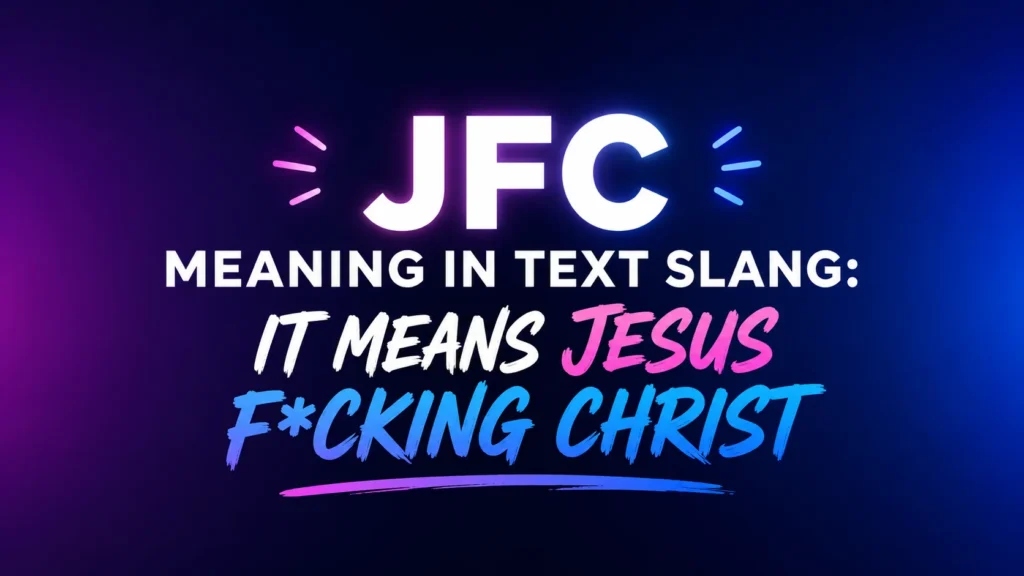
If you spend time on social media, gaming chats, TikTok comments, or casual texting, you’ve probably seen “JFC” pop up in emotional or dramatic conversations. For many people, the phrase looks confusing at first because it’s short, intense, and often used in moments of frustration, shock, or disbelief.
People search for “JFC meaning” because they want to understand whether it’s offensive, funny, sarcastic, or simply another internet abbreviation. In some situations, it’s used casually among close friends. In others, it can sound disrespectful or aggressive depending on the tone and audience.
Modern online communication moves fast. Abbreviations like JFC help people express strong reactions instantly without typing long emotional sentences. Still, understanding the emotional weight behind the phrase matters just as much as knowing the literal definition.
This guide explains what JFC means, where it came from, how people actually use it online, and when you should avoid using it altogether.
JFC Meaning – Quick Meaning
What Does JFC Mean?
JFC usually stands for:
- “Jesus F***ing Christ”
It’s commonly used as an emotional reaction to:
- Shock
- Frustration
- Anger
- Disbelief
- Annoyance
- Extreme surprise
The phrase is considered vulgar because it includes profanity and references a religious figure. Even though many internet users type it casually, some people may find it offensive or disrespectful.
Simple Definition
JFC is basically a stronger version of saying:
- “Oh my God”
- “Seriously?”
- “I can’t believe this”
- “What is happening?”
Quick Example Quotes
“JFC, that scared me.”
“JFC, the internet is down again.”
“You spent all your money already? JFC.”
In most cases, the phrase expresses an emotional reaction rather than a literal religious statement.
Origin & Background
Where Did JFC Come From?
JFC evolved from the full spoken expression “Jesus F***ing Christ,” which has existed in English-speaking culture for decades. People historically used it during stressful or shocking situations.
As texting culture grew, internet users shortened long emotional expressions into abbreviations. That’s how “JFC” became popular in online spaces.
Internet & Social Media Influence
The abbreviation became widely recognized through:
- Reddit discussions
- Twitter/X reactions
- Gaming communities
- TikTok comment sections
- Meme culture
- Group chats
Short-form slang works well online because people react quickly during emotional moments. Instead of writing a full sentence, users type “JFC” to instantly communicate intensity.
How the Meaning Evolved
Originally, the phrase sounded much harsher in spoken conversations. Online culture softened it slightly because abbreviations often feel less direct than fully typed profanity.
Still, the emotional meaning remains strong.
For example:
- Typing “JFC” may feel casual among friends.
- Saying the full phrase aloud in public sounds much more intense.
That difference matters socially.
Read More : What Does HU Mean in Text? Social Media Context Explained
Real-Life Conversations
WhatsApp Conversation
Person A:
“I just dropped my phone in the sink.”
Person B:
“JFC. Is it still working?”
Person A:
“Barely.”
Instagram DM
Person A:
“Did you see her new haircut?”
Person B:
“JFC, she completely changed her look.”
TikTok Comments
Person A:
“This roller coaster goes upside down five times.”
Person B:
“JFC, my anxiety could never.”
Text Message Conversation
Person A:
“I accidentally sent the email to the whole company.”
Person B:
“JFC. What happened after that?”
Person A:
“My boss called me immediately.”
These examples show how people use JFC naturally during emotional reactions rather than calm discussions.
Emotional & Psychological Meaning
What Emotion Does JFC Express?
JFC usually communicates emotional overload.
The person typing it may feel:
- Frustrated
- Shocked
- Overwhelmed
- Amused
- Stressed
- Speechless
Unlike neutral internet slang, JFC carries emotional intensity. That’s why people often type it during sudden reactions.
Why People Use It
Modern communication is fast and emotionally compressed. Instead of writing:
“I cannot believe this situation is happening right now.”
People simply type:
“JFC.”
That one abbreviation instantly communicates emotional pressure.
What It Reveals About Online Communication
Internet language rewards speed and emotional impact. Abbreviations like JFC help users react immediately without carefully crafting sentences.
It also reflects how online culture blends humor with stress. Many users type dramatic phrases jokingly even when situations are minor.
Personal-Style Scenario
Imagine you’re waiting all week for concert tickets. The moment sales open, the website crashes.
Your friend texts:
“JFC, not again.”
That response feels emotionally relatable because it captures frustration instantly without needing a long explanation.
Usage in Different Contexts
Social Media Usage
On social platforms, JFC often appears in:
- Viral reaction posts
- Meme captions
- Sports reactions
- Political discussions
- Entertainment drama
People use it for dramatic emphasis.
Example:
“JFC, this season finale was Mind-blowing.”
Friends & Relationships
Among close friends, the phrase may feel casual and humorous.
Example:
“JFC, you scared me.”
However, tone matters. In arguments, it can sound aggressive.
Work & Professional Settings
Using JFC professionally is risky.
Avoid it in:
- Emails
- Workplace chats
- Client conversations
- Academic communication
Even abbreviated profanity can appear disrespectful or unprofessional.
Casual vs Serious Tone
Sometimes JFC is playful.
Sometimes it signals real frustration.
Context changes everything.
For example:
- “JFC 😂” feels lighter.
- “JFC stop doing that” feels harsher.
Emojis, punctuation, and relationship dynamics heavily influence interpretation.
When NOT to Use It
Professional Environments
Avoid using JFC in:
- Office communication
- Job interviews
- Business presentations
- Customer service interactions
Even casual workplaces may view it negatively.
Religious Sensitivity
Some people consider the phrase offensive because it references Jesus in a profane way.
Using it around religious family members or strangers may create tension unintentionally.
Serious Emotional Situations
JFC can sound dismissive during sensitive conversations.
For example, avoid using it when someone discusses:
- Grief
- Mental health struggles
- Family emergencies
- Personal trauma
Strong slang reactions may appear emotionally careless.
Public or Formal Spaces
Typing JFC publicly on professional social accounts can damage credibility depending on your audience.
Common Misunderstandings
People Think It Always Means Anger
Not necessarily.
Sometimes users type JFC because they are surprised or impressed, not angry.
Example:
“JFC, that performance was incredible.”
Tone Gets Misread Online
Without facial expressions or voice tone, internet slang easily causes confusion.
A sarcastic “JFC” may accidentally sound hostile.
Some Assume It’s Harmless Because It’s Abbreviated
The abbreviation still carries the original meaning. Many people mentally expand the phrase automatically.
So while it looks softer, it may still offend certain audiences.
Literal vs Figurative Meaning
Most users are not making a religious statement. They’re expressing emotional intensity figuratively.
Still, intent does not always erase impact.
Comparison Table
| Expression | Meaning | Tone | Intensity |
|---|---|---|---|
| JFC | Shock or frustration | Strong | High |
| OMG | Surprise | Casual | Medium |
| WTF | Confusion or disbelief | Aggressive | High |
| SMH | Disappointment | Mild | Low |
| Oh no | Concern | Soft | Low |
| Seriously? | Frustration | Neutral | Medium |
| Holy crap | Surprise | Less offensive | Medium |
| Calm down | Opposite emotional tone | Neutral | Low |
Key Insight
JFC stands out because it combines shock, frustration, and emotional intensity in a very compact form. Compared to softer reactions like “OMG,” it feels sharper and more emotionally charged.
Variations / Types
JFC Dude
Expresses disbelief toward someone’s actions.
JFC Man
A conversational version often used among friends.
JFC Seriously
Adds extra frustration or exhaustion.
JFC Bro
Popular in gaming chats and Gen Z texting culture.
JFC 😂
Turns the phrase into a humorous reaction.
JFC Stop
Used during annoyance or irritation.
JFC Why
Expresses emotional confusion or frustration.
JFC That’s Wild
Often used after shocking news or videos.
JFC I’m Done
Signals emotional exhaustion or dramatic frustration.
JFC This App
Common online complaint format when technology fails.
How to Respond When Someone Uses It
Casual Replies
- “Right? That was amazing.”
- “I know, seriously.”
- “Exactly what I was thinking.”
Funny Replies
- “Your stress level just unlocked a new achievement.”
- “Take a deep breath first.”
- “Internet drama claims another victim.”
Mature Replies
- “Yeah, that situation sounds frustrating.”
- “I can understand why you reacted that way.”
Respectful Replies
If someone sounds genuinely upset:
- “Are you okay?”
- “What happened?”
- “Want to talk about it?”
The best response depends on whether the person is joking, venting, or emotionally overwhelmed.
Regional & Cultural Usage
Western Culture
In many Western online spaces, JFC is relatively common among younger users. It’s often viewed as edgy but casual.
Still, older generations may consider it highly disrespectful.
Asian Culture
In several Asian cultures, openly using profanity remains less socially accepted in public communication.
As a result, people may avoid expressions like JFC in formal or family settings even if they understand the slang online.
Middle Eastern Culture
Religious sensitivity tends to be stronger in many Middle Eastern communities. Using phrases connected to sacred figures casually may be considered offensive.
Because of this, internet users often avoid using JFC publicly.
Global Internet Usage
Global meme culture has spread the abbreviation worldwide. Many non-native English speakers recognize JFC through movies, gaming streams, or social media comments.
Sometimes users understand the emotional tone without fully knowing the literal phrase.
Generational Differences
Gen Z Usage
Gen Z often uses JFC humorously, dramatically, or ironically.
The phrase may appear alongside memes, emojis, or exaggerated reactions.
Millennial Usage
Millennials tend to use it more literally during frustration or stress.
Tone differences between generations can affect interpretation.
Is It Safe for Kids?
Understanding the Context
JFC is not considered kid-friendly slang because it includes profanity and religiously sensitive language.
Teenagers may encounter it frequently online, especially on:
- TikTok
- Gaming platforms
- Instagram comments
- Group chats
Parents and educators should focus on context rather than panic. Understanding why young people use emotional slang often matters more than simply banning certain words.
Teaching respectful communication helps children recognize when internet expressions are inappropriate in real-life situations.
FAQs
What does JFC stand for in texting?
JFC usually stands for “Jesus F***ing Christ,” an emotional expression used during shock, frustration, or disbelief.
Is JFC offensive?
It can be. Some people view it as vulgar or disrespectful because it combines profanity with religious language.
Is JFC the same as OMG?
Not exactly. Both express surprise, but JFC carries much stronger emotional intensity.
Do people use JFC jokingly?
Yes. Many internet users type it humorously during exaggerated reactions or meme conversations.
Can I use JFC at work?
It’s better not to. Even abbreviated profanity may appear unprofessional in workplace communication.
Why is JFC popular online?
Short emotional slang spreads quickly online because it helps people react instantly during fast-moving conversations.
Does everyone understand JFC?
Not always. Older users or people outside English-speaking internet culture may not recognize the abbreviation immediately.
Conclusion
JFC is one of those internet expressions that instantly communicates emotion, frustration, disbelief, or dramatic surprise. Although it looks simple as a four-letter abbreviation, its emotional weight depends heavily on tone, culture, audience, and context.
Among close friends, it may feel casual and humorous. In professional or sensitive settings, however, it can sound disrespectful or unnecessarily aggressive. That balance is important in modern digital communication where short phrases carry strong emotional meaning.
Understanding slang like JFC isn’t just about decoding letters. It’s about recognizing how people express stress, humor, exaggeration, and emotion online today. Once you understand the context behind it, you can decide confidently when to use it — and when it’s better left unsent.




1 thought on “JFC Meaning: Means in Social Media, and Everyday Conversations”