
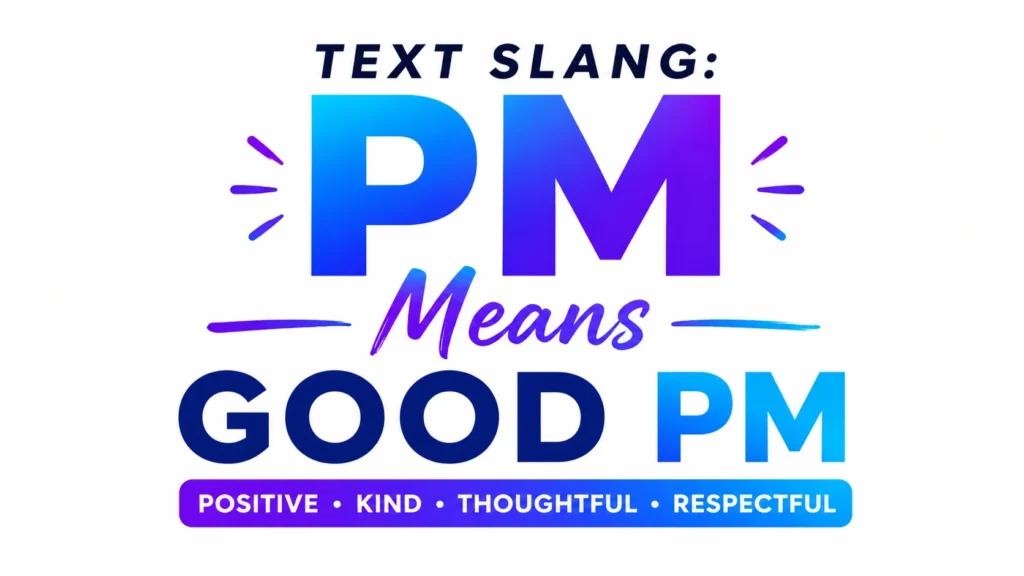
If you have ever received a text saying “Good PM” or noticed someone using it in a chat, you may have paused for a second and wondered what it actually means. Is it a typo? A shortcut? Or just another internet abbreviation people casually throw around online?
The phrase “good pm means” has become a surprisingly common search because many people encounter it in text messages, workplace chats, Instagram captions, or social media comments without fully understanding the context. Some assume it refers to “private message,” while others think it simply means “good afternoon.”
The confusion makes sense because digital communication moves fast. People shorten words, mix slang with formal greetings, and create habits that are not always obvious to everyone reading them.
In most cases, “it” simply means “Good Afternoon” or “Good Evening,” depending on regional habits and the timing of the message. However, context matters more than people realize.
This article breaks down the meaning, emotional tone, cultural use, social media relevance, and real-life usage of “Good PM” in a natural and practical way.
Good PM Means – Quick Meaning
Simple Definition
“it” is usually a shortened form of “Good Afternoon” or “Good Evening,” where “PM” refers to the post-noon part of the day.
People commonly use it in:
- Text messages
- Office chats
- WhatsApp conversations
- Social media comments
- Casual online greetings
It works similarly to greetings like:
- Good morning
- Good evening
- Good night
What “PM” Stands For
The term “PM” comes from the Latin phrase post meridiem, which means “after midday.”
So when someone says “Good PM,” they are essentially wishing you well during the afternoon or evening hours.
Quick Examples
“Good PM everyone, hope your day is going smoothly.”
“Hey! Good PM 😊 Did you finish the project?”
“Good PM guys, new video dropping tonight!”
Origin & Background
The Historical Meaning of PM
The abbreviation “PM” has existed for centuries in timekeeping systems. It became widely used with 12-hour clocks to distinguish afternoon and evening times from morning hours marked as “AM.”
Traditionally, people would say:
- Good afternoon
- Good evening
However, digital communication gradually encouraged shorter expressions.
How Internet Culture Changed It
As messaging apps became dominant, people started compressing phrases into faster forms.
Instead of typing:
- “Good afternoon everyone”
Many users began typing:
- “Good PM everyone”
This became especially common in:
- Group chats
- Workplace communication
- Online classrooms
- Gaming communities
Social Media Influence
Social media accelerated the use of shortened greetings because users wanted quick and casual communication.
Platforms like:
- TikTok
- Facebook Messenger
made short expressions feel more natural than formal language.
Over time, “it” started sounding friendly, modern, and efficient rather than incomplete.
Read More : WTH Full Form: Usage, Conversations and Social Media Context
Real-Life Conversations
WhatsApp Conversation
Person A:
Good PM! Did you reach home safely?
Person B:
Yeah, just got back. Traffic was amazing today 😩
Person A:
Glad you made it safely.
Instagram DM
Person A:
Good PM 🌸 Your latest post was beautiful.
Person B:
Thank you so much! That honestly made my day.
TikTok Comment Section
Person A:
it everyone from the Philippines 🇵🇭
Person B:
it! Watching this during my study break 😂
Text Message Between Friends
Person A:
it bro, you free tonight?
Person B:
Maybe after dinner. What’s the plan?
Emotional & Psychological Meaning
Why People Use It
Greetings may seem small, but they carry emotional weight.
When someone says “Good PM,” they are usually doing more than acknowledging time. They are signaling friendliness, respect, warmth, or social connection.
Even a short greeting can make conversations feel softer and more human.
The Psychology Behind Short Greetings
Modern communication is fast, but people still crave emotional acknowledgment.
Short greetings like “it” help people:
- Start conversations politely
- Create emotional comfort
- Maintain social bonds
- Show attention without sounding overly formal
In workplaces, these greetings can make communication feel less cold.
In friendships, they add familiarity.
A Real-Life Style Scenario
A few years ago, many remote workers noticed that simple greetings mattered more in digital communication than they did in face-to-face offices.
A quick “Good PM team” in a work group chat often created a friendlier atmosphere before discussing stressful tasks. Without it, messages sometimes felt demanding or robotic.
That small social warmth changes how people emotionally receive communication.
Usage in Different Contexts
Social Media
On social media, “Good PM” feels casual and community-oriented.
Creators often use it to greet followers before posting updates.
Example:
“Good PM everyone! New content coming soon.”
It creates a welcoming tone.
Friends & Relationships
Among friends, the phrase feels relaxed and conversational.
It can also show emotional effort, especially when someone checks in during the day.
Example:
“Good PM ❤️ Hope work isn’t too stressful.”
Work & Professional Settings
In professional environments, “Good PM” is acceptable in some cultures but may feel too informal in highly corporate settings.
For example:
- Internal team chats → acceptable
- Formal business emails → less ideal
A full “Good Afternoon” often sounds more polished professionally.
Casual vs Serious Tone
The tone depends heavily on context.
Casual tone:
“Good PM guys 😂”
Serious tone:
“Good PM everyone. Please review the attached report.”
The phrase itself is neutral, but emojis, punctuation, and surrounding language shape its emotional meaning.
When NOT to Use It
Formal Business Emails
Avoid “Good PM” in highly formal communication.
Instead, use:
- Good afternoon
- Good evening
- Dear Mr. Smith
This sounds more professional and polished.
Academic or Official Writing
Official documents should avoid abbreviations unless they are universally accepted.
“Good PM” may appear too casual in:
- Academic submissions
- Legal communication
- Government emails
Situations With Cultural Confusion
Some people interpret “PM” as:
- Private Message
- Prime Minister
- Project Manager
Without context, misunderstandings happen easily.
Emotional Situations
Avoid casual shortened greetings during sensitive conversations.
For example:
- Condolence messages
- Serious conflict discussions
- Medical emergencies
In emotional moments, full and thoughtful wording feels more respectful.
Common Misunderstandings
Confusing PM With Private Message
One of the biggest misunderstandings happens online.
Someone may read:
“Good PM”
and think:
“Good private message?”
This confusion is common on social media platforms.
Assuming It Is Incorrect English
Technically, “Good PM” is informal English rather than standard formal grammar.
Still, language naturally evolves through digital culture.
Many expressions once considered unusual eventually became normal online communication.
Tone Misinterpretation
Without emojis or context, some people perceive short greetings as cold.
Example:
“Good PM.”
can feel distant.
Meanwhile:
“Good PM 😊”
feels warm and friendly.
Tiny visual cues dramatically change tone online.
Comparison Table
| Expression | Meaning | Tone | Common Usage |
| Good PM | Good afternoon/evening | Casual-neutral | Chats, social media |
| Good Afternoon | Polite daytime greeting | Formal-friendly | Professional settings |
| Good Evening | Evening greeting | Respectful | Formal and casual |
| GM | Good morning | Very casual | Texting |
| GN | Good night | Friendly | Personal chats |
| Hey | Informal greeting | Relaxed | Friends |
| Sup? | What’s up? | Slang | Casual youth culture |
Key Insight
“Good PM” sits between formal and casual communication. It is polite enough for friendly professionalism but relaxed enough for modern internet culture.
Variations / Types
Good PM Everyone
Used in group chats or communities.
Gud PM
A highly casual texting version with intentional misspelling.
Good PM 😊
Adds warmth and friendliness.
Good PM Guys
Popular in team chats or friend groups.
Happy PM
A more cheerful variation used playfully.
Great PM
Used to wish someone a pleasant afternoon.
Blessed PM
Common in religious or family-oriented communities.
Warm PM Greetings
Sounds slightly more formal and thoughtful.
Lovely PM
Often used in affectionate conversations.
Good PM All
A workplace-friendly group greeting.
How to Respond When Someone Uses It
Casual Replies
- “Good PM too!”
- “Hope your day’s going well.”
- “Hey! Good PM 😊”
Funny Replies
- “Good PM… surviving the day somehow 😂”
- “Barely functioning but good PM anyway.”
Mature Replies
- “Good PM. Wishing you a productive afternoon.”
- “Thank you, hope things are going smoothly for you too.”
Respectful Replies
- “Good PM sir.”
- “Good PM ma’am, thank you for reaching out.”
Regional & Cultural Usage
Western Culture
In many Western countries, full greetings like “Good afternoon” remain more common in formal communication.
However, younger users increasingly shorten greetings online.
Asian Culture
Many Asian online communities heavily use shortened greetings because messaging culture values speed and efficiency.
In countries like the Philippines, “Good PM” is extremely common in Facebook groups and marketplace conversations.
Middle Eastern Culture
Polite greetings are culturally important in many Middle Eastern communities.
People may combine “Good PM” with respectful language or religious expressions.
Global Internet Usage
Globally, internet users adapt language creatively.
“Good PM” reflects how online culture prioritizes:
- Speed
- Simplicity
- Friendly tone
Generational Differences
Gen Z
Gen Z prefers short, expressive communication.
“Good PM” feels natural and efficient to them.
Millennials
Millennials may use it casually but often switch between shortened and full greetings depending on context.
Older generations may still prefer traditional greetings.
Is It Safe for Kids?
Understanding the Context
Yes, “Good PM” is generally safe for kids.
It is simply a casual greeting and contains no harmful or offensive meaning.
However, parents should still teach children:
- Appropriate online communication
- Context awareness
- Professional vs casual language
Understanding tone and audience is an important digital communication skill today.
FAQs
What does good PM mean in chat?
It usually means “Good Afternoon” or “Good Evening,” depending on the time and context of the conversation.
Is good PM grammatically correct?
It is considered informal rather than fully standard English. Still, many people use it naturally in online communication.
Why do people say good PM instead of good afternoon?
People shorten phrases online for speed, convenience, and casual communication.
Does PM mean private message here?
Usually no. In “Good PM,” the abbreviation refers to the afternoon/evening time period.
Is good PM professional?
It can work in casual workplace chats, but “Good Afternoon” sounds more professional in formal settings.
Which countries commonly use good PM?
It is especially common in online communities across parts of Asia, including the Philippines, as well as global social media spaces.
Can I use good PM on social media?
Yes. It is widely used on platforms like Instagram, Facebook, WhatsApp, and TikTok.
Conclusion
Language constantly evolves, especially online where speed and emotional connection matter equally. “Good PM” may look simple, but it reflects a bigger shift in how people communicate today.
It blends politeness with convenience. It keeps conversations friendly without sounding overly formal. Most importantly, it shows how even small greetings still carry emotional meaning in digital spaces.
Whether you use it in a WhatsApp chat, a social media comment, or a workplace group message, understanding the context helps you communicate more confidently.
A short greeting may only take two seconds to type, yet it can completely shape the tone of a conversation.



1 thought on “Good PM Means: Meaning Behind This Everyday Greeting”