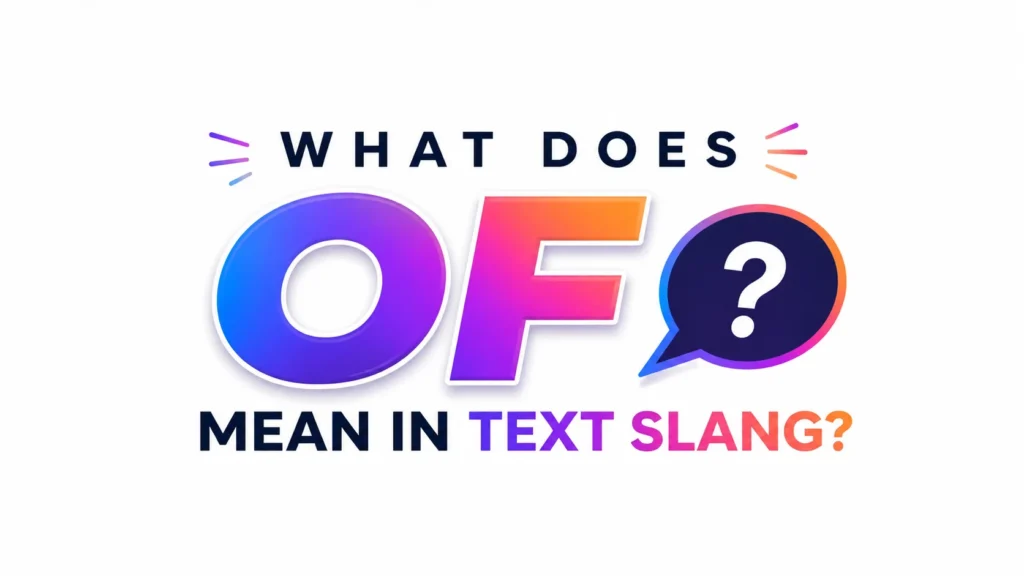
If you’ve spent time on social media, texting apps, or online discussions, you’ve probably come across the term “OF.” At first glance, it may seem like a simple abbreviation, but its meaning can vary depending on the conversation and platform.
Many people search for “what is OF” because they see it in TikTok comments, Instagram bios, direct messages, or online profiles and aren’t sure what it means. The confusion often comes from the fact that OF can represent different things in different contexts.
Understanding the meaning behind OF helps you avoid misunderstandings and communicate more confidently online. Whether you’re curious about internet slang, social media culture, or modern digital communication, this guide explains everything you need to know.
What Is OF? – Quick Meaning
Basic Definition
“OF” is most commonly used as an abbreviation for “OnlyFans,” a subscription-based content platform where creators share exclusive content with paying subscribers.
However, depending on the situation, “OF” can also simply mean the regular English word “of” when typed in shorthand or appear in other abbreviations.
Most Common Online Meaning
- OF = OnlyFans
- Frequently used on TikTok, Instagram, X, Reddit, and messaging apps
- Often mentioned when discussing content creators, influencers, subscriptions, or online businesses
Example Usage
“She started an OF account last year.”
“Everyone in the comments keeps asking if he has an OF.”
“The creator earns most of her income through OF.”
In most modern internet conversations, OF refers to OnlyFans unless the context suggests otherwise.
Origin & Background
How OF Became Popular
The abbreviation OF became widely recognized because of the rapid growth of the OnlyFans platform during the late 2010s and early 2020s.
As the platform gained popularity, users began shortening the name to OF in text messages, comments, and social media discussions. This made conversations quicker and easier, especially on platforms with character limits.
Cultural Influence
Internet culture thrives on abbreviations. Just as people shorten phrases like “DM,” “IMO,” or “TBH,” the term OF became part of everyday online language.
Many creators, influencers, and online personalities reference OF in their bios or promotional content, making the abbreviation familiar to millions of users worldwide.
Social Media Impact
TikTok, Instagram, and X significantly accelerated the spread of the term.
People often use OF indirectly because platform guidelines, algorithms, or community norms may discourage direct promotion. As a result, the abbreviation became a common shorthand recognized by internet users.
Evolution of Meaning
While OF originally functioned simply as a shortened platform name, it gradually became associated with creator economies, online entrepreneurship, digital subscriptions, and internet culture as a whole.
Real-Life Conversations
WhatsApp Conversation
Person A:
“Did you see her new business announcement?”
Person B:
“Yeah, she said she’s focusing on her OF now.”
Person A:
“Looks like it’s working really well for her.”
Instagram DM Conversation
Person A:
“How does that creator make money?”
Person B:
“Mostly through sponsorships and OF subscriptions.”
Person A:
“That makes sense.”
TikTok Comment Section
Person A:
“Why is everyone asking for the link?”
Person B:
“They’re talking about her OF.”
Person A:
“Oh, now I get it.”
Text Message Conversation
Person A:
“Have you heard of OF before?”
Person B:
“I knew the name but never understood what it was.”
Person A:
“It’s basically a subscription content platform.”
Emotional & Psychological Meaning
What Emotion Does It Express?
Unlike many slang terms, OF itself doesn’t usually express an emotion. Instead, it often represents curiosity, interest, support for creators, or discussions about online income.
Why People Use It
People prefer abbreviations because they’re fast and widely understood.
Using OF saves time while signaling familiarity with internet culture and modern social media trends.
What It Reveals About Modern Communication
The popularity of OF highlights how digital communication constantly evolves.
People naturally shorten frequently used terms. Over time, these abbreviations become part of shared online language that millions understand without explanation.
A Personal-Style Scenario
Imagine scrolling through TikTok and noticing hundreds of comments asking whether a creator has an OF account. If you’re unfamiliar with the abbreviation, the conversation feels confusing.
Once you understand the meaning, those comments instantly make sense. This is a perfect example of how internet vocabulary creates communities based on shared understanding.
Usage in Different Contexts
Social Media
OF is most commonly used on:
- TikTok
- X
- Snapchat
Users often mention it in comments, profiles, captions, and discussions about creators.
Friends and Relationships
Friends may casually discuss creators or influencers using the abbreviation.
For example:
“Does she have an OF?”
In this context, the term is usually informational rather than emotional.
Work and Professional Settings
Generally, OF should be used carefully in professional environments.
Although the abbreviation is widely recognized online, workplace conversations may require more context and professionalism.
Casual vs Serious Tone
Casual:
“He’s promoting his OF.”
Serious:
“The creator operates a subscription-based content business through OnlyFans.”
The audience determines which version is more appropriate.
When NOT to Use It
Professional Documents
Avoid using unexplained abbreviations in reports, presentations, or formal communications.
Mixed Audiences
Not everyone understands internet slang.
Older audiences or people unfamiliar with social media may misunderstand the term.
Educational Contexts
If clarity is important, write out the full platform name instead of relying on the abbreviation.
Situations That May Cause Confusion
Since OF is also a common English word, some readers may initially misunderstand your message if context is unclear.
Common Misunderstandings
Assuming It Always Means the Same Thing
Context matters.
Although OF commonly means OnlyFans online, it may occasionally have another meaning depending on the discussion.
Thinking It Is Always Inappropriate
Many people associate OF with adult content, but creators use the platform for various types of content, including fitness, education, music, and entertainment.
Confusing the Platform With the Creator
Someone mentioning OF may simply be discussing the platform, not necessarily participating in it.
Missing Context Clues
The surrounding conversation usually reveals the intended meaning.
Reading only one sentence can sometimes lead to incorrect assumptions.
Comparison Table
| Expression | Meaning | Similarity to OF | Typical Usage |
| OF | OnlyFans | Main term | Creator discussions |
| Fan Page | Support page | Related | Community content |
| Subscription Platform | Paid content service | Similar | Professional discussions |
| Creator Account | Content creator profile | Related | Social media conversations |
| Public Profile | Open social account | Opposite | Free content access |
| Premium Content | Exclusive content | Similar | Membership discussions |
| Membership Site | Subscriber-based platform | Similar | Business context |
Key Insight
The meaning of OF is heavily influenced by context. Most internet users recognize it as shorthand for OnlyFans, but understanding the surrounding conversation is essential for accurate interpretation.
Variations / Types
OF Account
Refers to a creator’s profile on the platform.
OF Creator
A person who produces content for subscribers.
OF Link
The direct URL to a creator’s page.
OF Subscription
A paid membership to access content.
OF Content
Material shared with subscribers.
OF Page
Another way of referring to a creator profile.
OF Model
A creator who earns income through subscriptions.
OF Promotion
Marketing efforts designed to attract subscribers.
OF Earnings
Income generated through the platform.
OF Community
The audience and subscribers supporting a creator.
How to Respond When Someone Uses It
Casual Replies
- “Oh, I know what you’re talking about.”
- “That makes sense.”
- “I’ve heard of it before.”
Funny Replies
- “The internet has a shortcut for everything.”
- “Another day, another abbreviation.”
Mature Replies
- “It’s become a major part of creator culture.”
- “Many people use it as a business platform.”
Respectful Replies
- “Everyone chooses different ways to share content online.”
- “I understand what you mean.”
Regional & Cultural Usage
Western Culture
In North America and Europe, OF is widely recognized due to extensive media coverage and creator marketing.
Asian Culture
Recognition varies by country. Younger internet users tend to understand the abbreviation more readily than older generations.
Middle Eastern Culture
Awareness exists, although discussions may be less public because of cultural and social sensitivities.
Global Internet Usage
The abbreviation has become globally recognizable among active social media users.
As internet culture spreads internationally, familiarity with OF continues to increase.
Generational Differences
Gen Z
Gen Z users typically recognize OF immediately because of heavy exposure to social media culture.
Millennials
Most Millennials understand the term, although familiarity depends on their online activity and platform usage.
Is It Safe for Kids?
Understanding Context Matters
Parents should be aware that children may encounter the abbreviation OF while browsing social media.
The term itself is not harmful. However, understanding the context in which it appears is important.
Open conversations about internet literacy, online content, and digital safety can help young users navigate unfamiliar terms responsibly.
FAQs
What does OF stand for online?
In most online conversations, OF stands for OnlyFans, a subscription-based content platform.
Why do people say OF instead of OnlyFans?
People use OF because it is shorter, quicker to type, and widely understood online.
Is OF considered slang?
It functions more as an abbreviation than traditional slang, although it is part of internet culture.
Does OF always mean OnlyFans?
No. Context matters, but online discussions most commonly use OF to mean OnlyFans.
Is OF used on TikTok?
Yes. TikTok users frequently mention OF in comments, captions, and discussions about creators.
Can OF have different meanings?
Yes. Like many abbreviations, its meaning depends on context and audience.
Should I use OF in professional communication?
Generally, it is better to use the full term when writing professionally to avoid confusion.
Conclusion
Understanding what OF means helps you navigate modern online conversations with greater confidence. While the abbreviation most commonly refers to OnlyFans, its meaning always depends on context.
As digital communication continues to evolve, abbreviations like OF become part of everyday language. Knowing how and when people use them allows you to participate in conversations more naturally and avoid unnecessary confusion.
Whether you encounter the term in a TikTok comment, an Instagram message, or a text from a friend, you’ll now understand exactly what people are referring to and how to interpret it appropriately.