If you’ve spent any time texting, scrolling through social media, or chatting online, you’ve probably come across the abbreviation WBU. It’s one of those short internet expressions that appears everywhere, yet many people still wonder about its exact meaning and proper usage.
The reason people search for the WBU full meaning is simple. Online conversations move quickly, and abbreviations often replace full sentences. While frequent internet users may instantly recognize WBU, newcomers can easily feel confused when they encounter it in a text message, Instagram comment, or WhatsApp chat.
Understanding WBU helps you communicate naturally in modern digital conversations. It also prevents misunderstandings and makes online interactions smoother and more engaging.
In this guide, you’ll learn exactly what WBU means, where it came from, how people use it today, and when it may not be appropriate to use it.
WBU Full Meaning – Quick Meaning
What Does WBU Stand For?
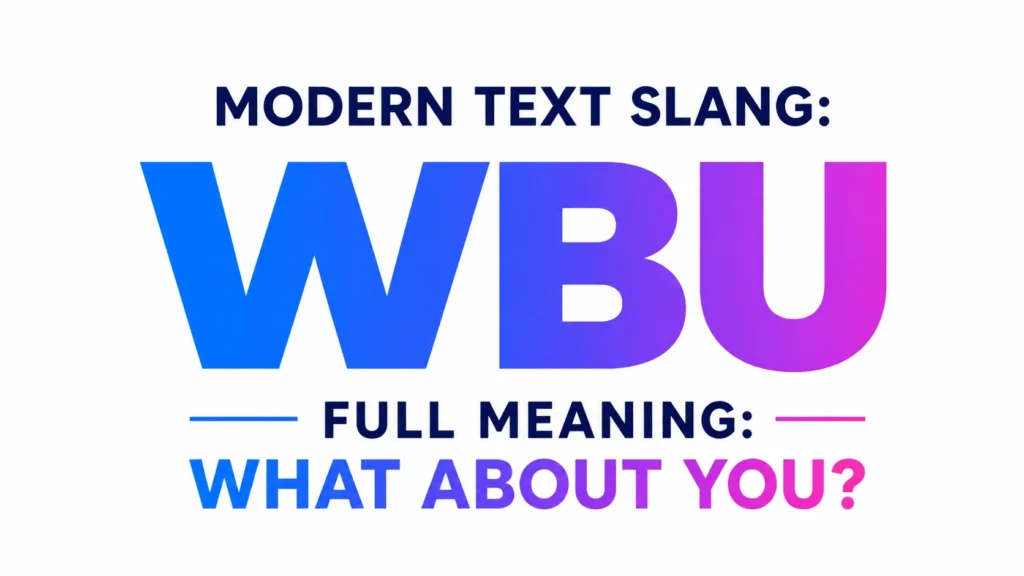
WBU stands for “What About You?”
People use it when they want to return a question, ask for another person’s opinion, or continue a conversation without typing a complete sentence.
Simple Definition
WBU is a casual texting abbreviation used to ask someone the same question they just asked you or to invite them to share their thoughts.
Quick Examples
- “I’m doing great today. WBU?”
- “I love traveling during winter. WBU?”
- “I’ve already finished my homework. WBU?”
Example Messages
“I’m staying home tonight. WBU?”
“I prefer coffee over tea. WBU?”
“My weekend was amazing. WBU?”
In all these examples, WBU simply means “What about you?”
Origin & Background
Early Internet Messaging
WBU emerged during the early years of online chatting when users wanted faster ways to communicate. Typing shorter messages became common in chat rooms, instant messengers, and SMS conversations.
Character limits also encouraged users to create abbreviations for frequently used phrases.
Rise of Mobile Texting
As mobile phones became popular, people looked for ways to save time while typing. Expressions like LOL, BRB, IMO, and WBU became part of everyday digital language.
WBU gained popularity because it allowed users to keep conversations flowing without repeatedly typing “What about you?”
Social Media Influence
Social media platforms accelerated the spread of WBU.
Today, you’ll see it on:
- TikTok
- Snapchat
- Facebook Messenger
- X
- Discord
Evolution of Meaning
The meaning of WBU has remained remarkably consistent over time.
Although internet slang often changes, WBU continues to mean one simple thing:
What About You?
The difference is that today it feels more natural and widely accepted than ever before.
Real-Life Conversations
WhatsApp Conversation
Person A:
I finally finished my exams today.
Person B:
That’s awesome. How do you feel?
Person A:
Relieved and excited. WBU?
Person B:
Still studying for mine unfortunately.
Instagram DM
Person A:
I loved your vacation photos.
Person B:
Thank you. It was such a great trip.
Person A:
My dream destination is Italy. WBU?
Person B:
Japan is definitely at the top of my list.
TikTok Comments
Person A:
This song has been on repeat all week.
Person B:
Same here.
Person A:
Favorite part?
Person B:
The chorus. WBU?
Text Message
Person A:
What are you doing this weekend?
Person B:
Probably watching movies and relaxing. WBU?
Person A:
Going hiking with friends.
Emotional & Psychological Meaning
More Than a Question
At first glance, WBU seems like a simple abbreviation.
However, it often serves a deeper social purpose.
When someone says WBU, they’re signaling that they care about your perspective. Instead of focusing entirely on themselves, they’re inviting you into the conversation.
Creating Balance
Healthy conversations involve sharing from both sides.
WBU helps create that balance by encouraging reciprocity.
Rather than dominating a discussion, the speaker actively seeks input from the other person.
Building Connection
People naturally enjoy feeling heard.
Using WBU demonstrates curiosity and engagement, which can strengthen relationships and make conversations feel more personal.
A Real-Life Scenario
Imagine chatting with a friend after a stressful week.
You tell them you’re feeling exhausted and overwhelmed.
Instead of changing the subject, they respond:
“I’m sorry you’ve had a rough week. I’ve been busy too. WBU, how are you holding up emotionally?”
That simple question creates space for deeper connection and understanding.
Usage in Different Contexts
Social Media
On social media, WBU appears frequently in comments, captions, and direct messages.
Examples:
- “Favorite movie this year? WBU?”
- “I can’t stop listening to this artist. WBU?”
Friends and Relationships
Among friends, WBU feels natural and conversational.
It keeps discussions moving while showing interest in the other person’s experiences.
Examples:
- “I had a great day. WBU?”
- “I’m thinking about changing jobs. WBU?”
Work and Professional Settings
WBU can sometimes appear in informal workplace chats.
However, professional communication often benefits from complete sentences.
Instead of writing:
“WBU?”
You might write:
“What are your thoughts?”
or
“What about your experience?”
Casual vs Serious Tone
In casual settings, WBU sounds friendly and relaxed.
In serious discussions, especially professional or formal conversations, the abbreviation may appear overly informal.
Context matters.
When NOT to Use It
Formal Business Emails
Avoid WBU in:
- Client communications
- Official reports
- Job applications
- Professional proposals
Using full language creates a stronger impression.
Academic Writing
Essays, research papers, and educational assignments require formal language.
WBU does not belong in academic writing.
Sensitive Conversations
When discussing grief, illness, conflict, or emotional hardship, complete sentences often communicate greater empathy.
Instead of:
“WBU?”
Consider:
“How are you feeling about everything?”
Cross-Cultural Communication
Not everyone understands internet abbreviations.
Using WBU with unfamiliar audiences may create confusion.
Common Misunderstandings
Assuming Multiple Meanings
Some people think WBU has hidden meanings.
In most cases, it simply means:
“What About You?”
Tone Confusion
Because text lacks facial expressions and voice tone, WBU can occasionally seem rushed or uninterested.
The intention usually depends on the surrounding conversation.
Mistaking It for Formal English
WBU belongs to informal digital communication.
It should not replace standard language in professional settings.
Reading It Literally
Some users interpret WBU as a completely new phrase.
In reality, it’s merely a shortened version of an everyday question.
Comparison Table
| Expression | Meaning | Usage Style | Relationship to WBU |
| WBU | What About You? | Casual | Main expression |
| HBU | How About You? | Casual | Very similar |
| WYD | What Are You Doing? | Casual | Different question |
| IMO | In My Opinion | Casual | Opinion-based |
| IDK | I Don’t Know | Casual | Response phrase |
| NVM | Never Mind | Casual | Conversation-ending |
| What about you? | Full phrase | Neutral | Original version |
| Tell me your thoughts | Request for opinion | Professional | Formal alternative |
Key Insight
WBU remains popular because it is short, friendly, and efficient. While many slang expressions come and go, WBU continues to thrive because it fulfills a basic conversational need: inviting someone else to participate.
Variations / Types
WBU?
The standard version meaning “What About You?”
Wbu
A lowercase variation commonly used in texting.
WBUU
An extended version that adds a playful or friendly tone.
WBU Then?
Used when asking for someone’s next action or response.
WBU Bro?
A friendly version often used among close friends.
WBU Sis?
A casual variation commonly used between female friends.
WBU Though?
Used when seeking a more personal opinion.
HBU
Means “How About You?” and functions almost identically.
What Bout You?
An informal written version of the full phrase.
And You?
A shorter alternative with the same conversational purpose.
How to Respond When Someone Uses It
Casual Replies
- “I’m doing great.”
- “Not much, just relaxing.”
- “Pretty busy today.”
Funny Replies
- “Surviving on coffee and hope.”
- “Mentally on vacation.”
- “Trying not to become a potato.”
Mature Replies
- “I’ve been focusing on work lately.”
- “Things have been challenging, but I’m managing.”
Respectful Replies
- “Thank you for asking. I’m doing well.”
- “I appreciate that. Things are going smoothly.”
Regional & Cultural Usage
Western Culture
In North America and many Western countries, WBU is widely understood among internet users.
It appears frequently in casual texting and social media interactions.
Asian Culture
Many young people across Asia use WBU when communicating in English online.
However, usage often varies depending on language proficiency and local internet culture.
Middle Eastern Culture
WBU appears regularly among younger users who engage with English-language content and international social platforms.
Global Internet Usage
The internet has transformed WBU into a globally recognized abbreviation.
People from different countries use it to bridge communication styles and maintain quick conversations.
Generational Differences
Gen Z
Gen Z uses WBU naturally and frequently in everyday chats.
Millennials
Millennials also understand WBU well, though some prefer writing complete phrases depending on the situation.
Older generations may recognize it less often, especially if they are less active on social media.
Is It Safe for Kids?
Understanding the Context
Yes, WBU is generally safe for kids.
It contains no offensive language, inappropriate meaning, or hidden implications.
Parents should simply ensure children understand the context of internet abbreviations and know when formal language is more appropriate.
Teaching digital communication skills helps young users navigate online conversations confidently and responsibly.
FAQs
What is the full meaning of WBU?
WBU stands for “What About You?” It is commonly used in texting and online conversations.
Is WBU considered slang?
Yes. WBU is internet slang and texting shorthand used in informal communication.
Are WBU and HBU the same?
They are very similar. WBU means “What About You?” while HBU means “How About You?”
Can I use WBU in professional emails?
It is generally better to avoid WBU in professional communication and use complete sentences instead.
Why do people use WBU?
People use it to save time, keep conversations flowing, and invite others to share their opinions or experiences.
Is WBU rude?
No. In most situations, WBU is polite and conversational. Tone depends on context.
Do people still use WBU in 2026?
Yes. WBU remains one of the most commonly used texting abbreviations across social media and messaging platforms.
Conclusion
Understanding the WBU full meaning is surprisingly useful in today’s digital world. While the abbreviation itself is simple, it plays an important role in keeping conversations balanced, engaging, and interactive.
At its core, WBU means “What About You?”—a small question that encourages connection and shows interest in another person’s perspective.
Whether you’re texting friends, chatting on social media, or learning modern internet slang, knowing when and how to use WBU can help you communicate more naturally. Like many successful abbreviations, its popularity comes from its simplicity.
The next time someone sends you “WBU?” you’ll know exactly what they mean—and you’ll be ready with a confident reply.