If you’ve been chatting on TikTok, Snapchat, Instagram, or texting friends, you’ve probably seen ASF added to the end of a sentence. It may look confusing at first, especially if you’re unfamiliar with internet slang.
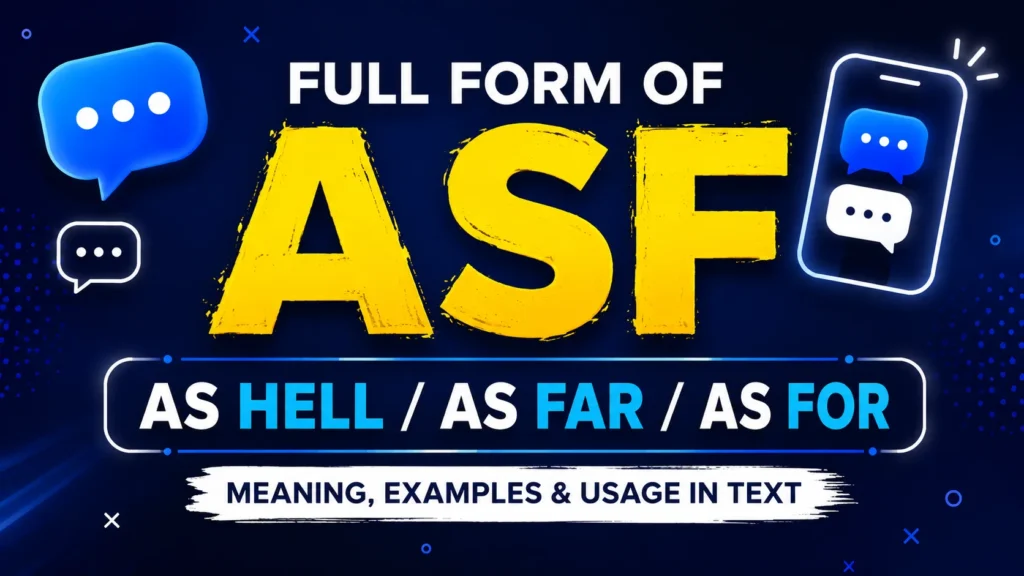
The full form of ASF in online conversations is “As F*.”** It’s an informal slang abbreviation used to emphasize an adjective or feeling, making it much stronger. Because it contains implied profanity, it’s mainly used in casual conversations and social media rather than professional settings.
This guide explains what ASF means, how people use it, examples, alternative meanings, and when you should avoid using it.
Full Form of ASF – Quick Meaning
What Does ASF Stand For?
ASF = As F***
It is used to intensify or emphasize a word.
Think of it as meaning:
- Very
- Extremely
- Really
- Incredibly
Simple Examples
“I’m tired ASF.”
“That movie was funny ASF.”
“This weather is hot ASF.”
In each sentence, ASF simply makes the adjective stronger.
Origin and Background
Where Did ASF Come From?
ASF developed from the spoken phrase “as f*,”** which has been used in casual English for decades to add emphasis.
As texting became more popular, people shortened the phrase to ASF to type faster while still expressing strong emotions.
Social Media Influence
Today, ASF is commonly used on:
- TikTok
- Snapchat
- X (Twitter)
- Discord
Memes and viral videos helped make ASF a common part of internet slang, especially among younger users.
How Its Meaning Has Evolved
Although ASF originally reflected strong emotion or exaggeration, many people now use it casually and humorously without intending to sound offensive.
Real-Life Conversations
Person A: How was the exam?
Person B: Hard ASF 😭
Instagram DM
Person A: That outfit looks amazing.
Person B: Thanks! It was expensive ASF 😂
TikTok Comments
Person A: This song is catchy.
Person B: Catchy ASF.
Text Message
Person A: Are you hungry?
Person B: Hungry ASF.
Emotional and Psychological Meaning
What Emotion Does ASF Express?
ASF usually communicates:
- Excitement
- Surprise
- Frustration
- Happiness
- Exaggeration
- Strong emotion
Why Do People Use It?
Instead of writing:
“I’m extremely tired.”
People simply write:
“I’m tired ASF.”
It feels quicker, more expressive, and matches the casual tone of online conversations.
Personal Scenario
Imagine finishing a long day of work or school. A friend asks how you’re feeling, and instead of typing a long explanation, you reply:
“Exhausted ASF.”
That short response instantly communicates the intensity of your feelings.
Usage in Different Contexts
Social Media
ASF appears frequently in:
- Captions
- Comments
- Memes
- Stories
Example:
“Vacation was fun ASF.”
Friends and Relationships
Friends commonly use ASF to exaggerate emotions or experiences.
Example:
“You scared me ASF.”
Work or Professional Settings
Avoid ASF in:
- Business emails
- School assignments
- Professional messages
- Customer communication
Use words like:
- Very
- Extremely
- Highly
instead.
Casual vs. Serious Tone
ASF fits casual conversations but sounds inappropriate in formal situations because it represents implied profanity.
When NOT to Use It
Avoid ASF:
- At work
- During interviews
- In professional emails
- With teachers
- Around people who may dislike profanity
- In formal presentations
Common Misunderstandings
Does ASF Always Mean “As F***”?
In texting and social media, yes—most of the time.
However, outside internet slang, ASF may also refer to organizations or technical terms, depending on the context.
Is ASF Offensive?
The abbreviation hides the explicit word, but many people still recognize its meaning. Use it carefully around audiences who may find profanity inappropriate.
Comparison Table
| Expression | Meaning | Strength |
|---|---|---|
| ASF | As F*** | Very strong |
| Very | Standard emphasis | Mild |
| Really | Casual emphasis | Mild |
| Super | Informal emphasis | Medium |
| Extremely | Formal emphasis | Strong |
| So | Conversational emphasis | Medium |
Key Insight
ASF is much more informal than words like “very” or “extremely.” It’s best reserved for casual online conversations with people who understand internet slang.
Variations and Similar Expressions
AF
As F*** (the most common alternative).
Very
Formal and polite.
Really
Everyday emphasis.
Extremely
Professional alternative.
Super
Friendly and informal.
So
Common in conversation.
Amazing
Used for dramatic emphasis.
Incredibly
Strong but formal.
Totally
Expresses complete agreement or emphasis.
Seriously
Adds emotional weight.
How to Respond When Someone Uses ASF
Casual Replies
- “I know, right!”
- “Same here.”
- “Absolutely.”
Funny Replies
- “Facts 😂”
- “No lies detected.”
- “You’re not wrong.”
Mature Replies
- “I completely understand.”
- “That makes sense.”
Respectful Replies
- “Hope things get better.”
- “I can relate.”
Regional and Cultural Usage
Western Culture
ASF is common among Gen Z and young Millennials on social media.
Asian Culture
English-speaking internet users recognize ASF through TikTok, Instagram, and gaming communities.
Middle Eastern Culture
People familiar with English slang understand ASF, though it’s less common in formal communication due to its implied profanity.
Global Internet Usage
ASF is widely recognized across online platforms and gaming communities, especially in memes and casual chats.
Gen Z vs. Millennials
Gen Z
- Uses ASF frequently in comments, captions, and texts.
- Often combines it with emojis.
Millennials
- Understand ASF but may use “AF” or write “really” instead.
Is ASF Safe for Kids?
Not completely.
Although ASF is abbreviated, it still represents a profanity. Parents and teachers should explain its meaning and encourage children to use more respectful alternatives in school or formal settings.
FAQs
What is the full form of ASF?
ASF stands for “As F*.”** It’s used to emphasize an adjective or feeling.
What does ASF mean in texting?
It means “very” or “extremely,” but in a much more informal and stronger way.
Is ASF the same as AF?
Yes. Both abbreviations have essentially the same meaning.
Is ASF considered a bad word?
The abbreviation itself isn’t explicit, but it represents a profane phrase, so some people may find it offensive.
Can I use ASF in school or work?
No. It’s better to use words like “very,” “really,” or “extremely” in professional or academic settings.
Why is ASF popular on TikTok?
Its short length and expressive tone make it perfect for captions, comments, memes, and fast-paced conversations.
Conclusion
The full form of ASF is “As F*,”** and it’s one of the most popular slang abbreviations used to add strong emphasis in texts and social media. Whether you’re saying you’re “happy ASF,” “tired ASF,” or “busy ASF,” the abbreviation simply intensifies the feeling. Since it contains implied profanity, it’s best used only in casual conversations and avoided in professional or formal settings.