If you’ve been scrolling through TikTok, Snapchat, Instagram, or texting with friends, you’ve probably seen someone type “ASL?” and wondered what it actually means. The answer isn’t always straightforward because ASL has more than one meaning, depending on where and how it’s used.
For some people, ASL is an old internet abbreviation asking for personal details. For others, it’s a modern slang term used in completely different conversations. That mix of old and new meanings often creates confusion, especially for younger users who discover the term on social media.
This guide explains what ASL slang means today, where it came from, how people use it across different platforms, and when you should—or shouldn’t—use it.
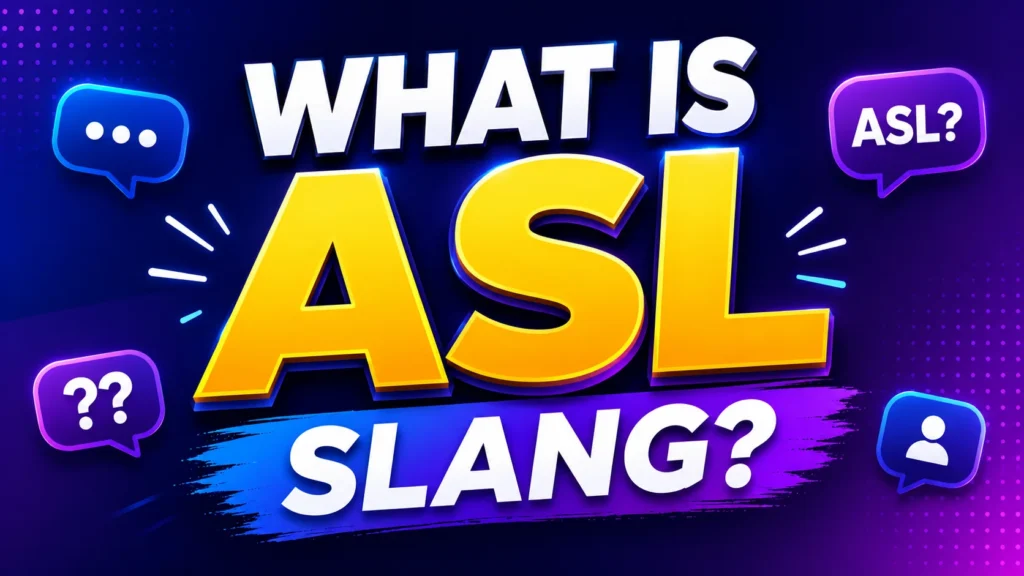
What Is ASL Slang?
Quick Meaning
In internet slang, ASL most commonly stands for:
- Age
- Sex
- Location
It was originally written as a quick question:
“ASL?”
which simply meant:
“What’s your age, gender, and where are you from?”
Today, the abbreviation has evolved. On platforms like TikTok or X, people sometimes use ASL jokingly, nostalgically, or even sarcastically when talking to strangers online.
Simple Examples
“Someone joined the chat and immediately asked, ‘ASL?'”
“That comment section feels like old-school internet with everyone saying ASL.”
“He jokingly replied with ASL like it was 2005.”
Origin & Background
The Early Internet Era
ASL became popular during the late 1990s and early 2000s on chat rooms such as AOL Instant Messenger, MSN Messenger, Yahoo Messenger, and IRC.
Back then, people often talked to strangers online. Instead of typing three separate questions, users simply wrote:
ASL?
The other person would answer with something like:
“18/F/California”
meaning:
- 18 years old
- Female
- California
It became one of the most recognized internet abbreviations of its time.
How Social Media Changed It
Modern social media doesn’t rely on anonymous chat rooms as much, so the original purpose of ASL became less common.
Instead, younger users started using it:
- as a nostalgic joke
- in memes
- ironically
- when pretending they’re back on old internet forums
Why It Came Back
TikTok and meme culture love bringing back forgotten internet slang.
As a result, many Gen Z users discovered ASL without ever using AOL or MSN Messenger, giving the abbreviation a second life online.
Real-Life Conversations
Person A:
Did that random guy message you?
Person B:
Yep… first thing he asked was “ASL?”
Instagram DMs
Person A:
This feels like the early internet.
Person B:
Haha seriously. Someone literally opened with ASL 😂
TikTok Comments
Person A:
Only real internet veterans know what ASL means.
Person B:
That abbreviation instantly took me back.
Text Messages
Person A:
He asked ASL before saying hello.
Person B:
That’s such an old-school move.
Emotional & Psychological Meaning
Why People Still Use It
Although ASL is simple, it often reflects curiosity.
People want to know:
- who they’re talking to
- whether someone is around their age
- where they’re from
However, in today’s online culture, it is more commonly used humorously than seriously.
What It Reveals
Modern use often communicates:
- nostalgia
- playful humor
- internet experience
- familiarity with old online culture
A Personal Scenario
Imagine joining a gaming server where everyone starts joking about “old internet days.” Someone types:
“ASL?”
Everyone laughs because they understand the reference. Nobody is actually collecting information—they’re sharing a joke about how people used to chat online.
Usage in Different Contexts
Social Media
On TikTok, Instagram, Reddit, and X, ASL usually appears:
- in memes
- nostalgic posts
- humorous comments
- discussions about early internet culture
Friends
Among friends, ASL is mostly playful.
Example:
“I can’t believe you actually asked ASL 😂”
Professional Settings
Avoid using ASL in workplace conversations.
Many people may misunderstand it or find it inappropriate.
Casual vs Serious Tone
Casual:
- Funny
- Relaxed
- Internet humor
Serious:
- Asking strangers for personal details can feel intrusive.
When NOT to Use It
With Strangers
Randomly asking “ASL?” may make people uncomfortable.
Professional Communication
Business emails, work chats, and academic discussions are not appropriate places for internet slang.
Sensitive Situations
Avoid requesting someone’s personal information unless it’s genuinely necessary.
Cultural Differences
Some people have never seen ASL used this way and may confuse it with something entirely different.
Common Misunderstandings
Confusing It With American Sign Language
One of the biggest misconceptions is assuming ASL always refers to slang.
In many situations, ASL actually means American Sign Language, the language used by many Deaf and hard-of-hearing communities.
Context matters.
Assuming It’s Always Flirting
While ASL sometimes appeared in online dating chats years ago, it doesn’t automatically indicate romantic interest today.
Thinking It’s New Slang
ASL is actually one of the oldest internet abbreviations still recognized today.
Comparison Table
| Expression | Meaning | Typical Use |
|---|---|---|
| ASL | Age, Sex, Location | Online chats |
| A/S/L | Original written format | Older chat rooms |
| WYD | What are you doing? | Casual texting |
| WYA | Where are you? | Messaging friends |
| IDC | I don’t care | Casual conversations |
| IRL | In real life | Internet discussions |
| DM | Direct Message | Social media |
| AMA | Ask Me Anything | Reddit and forums |
Key Insight
Unlike most texting abbreviations, ASL carries a strong sense of internet history. Many people recognize it not because they still use it daily, but because it reminds them of the earliest days of online chatting.
Variations and Related Forms
1. ASL?
The classic question asking for age, sex, and location.
2. A/S/L
The original version using slashes.
3. ASL pls
A more casual request.
4. ASL lol
Used jokingly.
5. ASL anyone?
Common in nostalgic memes.
6. ASL 😂
Adds humor.
7. Old-school ASL
References early internet culture.
8. Classic ASL
Highlights its historical use.
9. ASL check
Playful way to reference the old question.
10. Throwback ASL
Used when reminiscing about older chat platforms.
How to Respond When Someone Uses ASL
Casual Replies
- 21, M, Chicago.
- 19, F, London.
- 24, Canada.
Funny Replies
- Nice try, FBI 😂
- Feels like we’re back in 2003.
- AOL called—they want their chat room back.
Mature Replies
- I’d rather not share personal details.
- I’d prefer getting to know each other first.
Respectful Replies
- I’m comfortable sharing my age but not my location.
- Thanks for asking, but I keep that information private.
Regional & Cultural Usage
Western Culture
Most adults recognize ASL from old internet chat rooms.
Asian Culture
The abbreviation is less common but still appears in gaming communities and international chats.
Middle Eastern Culture
People are generally more cautious about sharing personal details, so ASL is less frequently used with strangers.
Global Internet Usage
International gaming servers and online forums occasionally reference ASL as a nostalgic internet joke.
Gen Z vs Millennials
Gen Z
- Mostly knows ASL through memes and TikTok.
Millennials
- Many actually used ASL during the early days of online chatting.
Is It Safe for Kids?
ASL itself is not offensive. However, because it asks for personal information, children should be careful when strangers use it online.
Parents should encourage kids not to share their age, gender, or location with people they don’t know. Understanding online privacy is more important than recognizing the abbreviation itself.
FAQs
What does ASL stand for in slang?
It usually means Age, Sex, Location, a classic internet abbreviation used to ask someone basic personal information.
Does ASL always mean Age, Sex, Location?
No. In many contexts, ASL refers to American Sign Language. The surrounding conversation helps determine the intended meaning.
Is ASL still used today?
Yes, but it’s mostly used humorously, nostalgically, or in memes rather than as a serious introduction.
Is ASL considered Gen Z slang?
Not originally. ASL became popular long before Gen Z, but younger users have revived it through social media trends.
Is asking “ASL?” rude?
It depends on the situation. Among friends, it can be a joke. Asking strangers for personal information without context may feel intrusive.
What platforms commonly use ASL?
You may see it on TikTok, Reddit, Discord, Instagram, gaming communities, and older internet discussion forums.
Is ASL safe to reply to?
Only share personal information if you trust the person and feel comfortable doing so. Avoid revealing sensitive details to strangers online.
Conclusion
ASL is one of the internet’s oldest and most recognizable abbreviations. Originally standing for Age, Sex, Location, it helped strangers introduce themselves in early online chat rooms. While its practical use has faded, it has found new life through memes, nostalgic posts, and social media humor.
Understanding the context is essential because ASL can also refer to American Sign Language. Whether you encounter it in a meme, a gaming chat, or a direct message, knowing both meanings helps you interpret the conversation accurately and respond with confidence.