
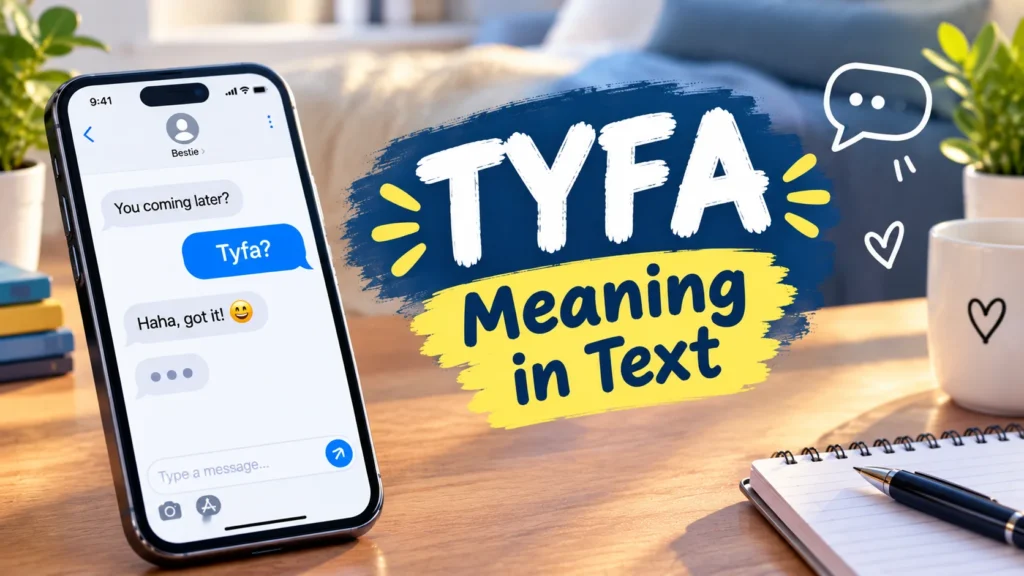
If you have seen TYFA in a text message, social media comment, or online conversation, you may wonder what these four letters mean. Texting abbreviations can be confusing because people often shorten common phrases to make conversations faster and more casual.
TYFA usually means “Thank You for Asking.”
People use it when someone asks about their feelings, situation, opinion, or well-being. It is generally friendly and polite, although the exact tone can depend on the conversation.
For example, someone might ask, “How are you doing?” and the other person could reply, “I’m doing good, TYFA!”
Let’s look at what this abbreviation means, how people use it, and how you can respond naturally.
What Does TYFA Mean?
TYFA stands for “Thank You for Asking.”
It is an informal abbreviation commonly used in digital conversations. Instead of typing the entire phrase, someone may use TYFA to give a quick response.
For example:
“I’m feeling much better now, tyfa.”
Here, the person is thanking the other person for asking about their condition.
The abbreviation is especially useful when someone has shown genuine interest or concern.
TYFA Meaning in Text Messages
In texting, TYFA is usually a simple way to acknowledge someone’s question.
For example:
- “I’m okay, tyfa.”
- “Doing great, TYFA!”
- “Not the best day, but tyfa.”
- “I appreciate it, tyfa.”
The abbreviation keeps the conversation short while still showing appreciation.
Because it is casual internet language, it is more appropriate for texts, DMs, chats, and social media than formal communication.
TYFA Meaning in Chat
In online chats, TYFA can make a response sound quick and conversational.
Imagine a friend asks:
Friend: “How have you been lately?”
You: “Pretty good, TYFA.”
The abbreviation works as a short version of “Thank you for asking.”
It can also be used when answering questions about school, work, relationships, plans, or personal situations.
Read More : Best Friend Duo Names: 200+ Cute, Funny & Cool Ideas
How Is TYFA Used?
TYFA is generally used after someone asks a question that shows interest or concern.
Common situations include:
When Someone Asks How You Are
Person: “Are you feeling better?”
Reply: “Yeah, much better. TYFA!”
When Someone Checks on You
Person: “Everything okay?”
Reply: “Yeah, I’m fine. TYFA.”
When Someone Asks About Your Day
Person: “How was your day?”
Reply: “It was actually pretty good, tyfa.”
When Someone Asks About a Situation
Person: “Did everything work out?”
Reply: “Yes, thankfully. TYFA for asking.”
In each case, the abbreviation expresses appreciation for the person’s question.
Is TYFA a Slang Word?
TYFA is better described as a texting abbreviation rather than traditional slang.
It shortens the phrase “Thank You for Asking” so that people can communicate more quickly.
Like many internet abbreviations, its use is informal. You may see it in:
- Text messages
- Group chats
- Instagram DMs
- Snapchat
- TikTok comments
- Facebook messages
- Discord
- Gaming chats
- Online forums
It would generally sound unusual in a formal business letter or professional report.
TYFA Meaning on Social Media
On social media, TYFA can be used when someone asks a personal or conversational question.
For example:
Comment: “How are you doing after everything?”
Reply: “I’m doing better now, TYFA ❤️”
It can also appear in direct messages:
Friend: “Did you enjoy the concert?”
Reply: “Yes! It was amazing, tyfa.”
The meaning stays the same even when the platform changes.
TYFA Meaning From a Girl
If a girl sends you TYFA, it normally means “Thank You for Asking.”
The abbreviation by itself does not necessarily have a romantic meaning.
For example:
You: “How are you feeling today?”
Her: “Much better, tyfa.”
She is simply acknowledging your question and thanking you for showing interest.
However, the tone can depend on the rest of the conversation. If she regularly talks with you, shares personal details, or continues the conversation, TYFA may be part of a warmer interaction. The abbreviation itself should not be treated as a secret romantic signal.
TYFA Meaning From a Guy
When a guy uses TYFA, it usually has the same meaning: “Thank You for Asking.”
For example:
You: “How’s everything going?”
Him: “Pretty good, TYFA.”
It is generally a polite and friendly response.
Whether the message sounds warm, neutral, or slightly distant depends more on the surrounding conversation than on TYFA itself.
Is TYFA Positive or Negative?
TYFA is generally positive or neutral.
It expresses appreciation toward someone who asked a question.
For example:
“I’m doing okay, tyfa.”
This sounds polite and appreciative.
However, tone can change depending on punctuation, capitalization, and the rest of the message.
Compare:
“TYFA 😊” — friendly and warm.
“tyfa.” — could sound neutral or slightly brief.
“Thank you for asking! I really appreciate it.” — more openly appreciative.
So, don’t interpret the abbreviation alone. Look at the complete conversation.
Examples of TYFA in Texting
Here are some natural examples of how people might use the abbreviation:
Example 1:
“I’m doing great, TYFA!”
Example 2:
“Honestly, I’ve been stressed lately, but tyfa.”
Example 3:
“Yeah, everything is fine now. TYFA for checking.”
Example 4:
“I’m feeling better today, tyfa.”
Example 5:
“Not sure yet, but I appreciate you asking. TYFA.”
Example 6:
“School has been busy, but I’m surviving 😂 tyfa.”
These examples show that the abbreviation can work in both serious and casual conversations.
TYFA vs. TY
TYFA and TY are related, but they aren’t exactly the same.
TY means “Thank You.”
TYFA means “Thank You for Asking.”
For example:
“TY!”
This simply thanks someone.
“TYFA!”
This specifically thanks someone for asking a question.
The second expression provides more context and acknowledges the person’s interest.
TYFA vs. TYSM
Another abbreviation you may see is TYSM, which means “Thank You So Much.”
The difference is simple:
- TY = Thank You
- TYSM = Thank You So Much
- TYFA = Thank You for Asking
For example:
“TYSM for the gift!”
But:
“I’m doing better, TYFA.”
The first expresses strong gratitude, while the second specifically responds to someone’s question.
How to Reply to TYFA
If someone sends you TYFA, you usually don’t need a complicated response.
Your reply can depend on the conversation.
Friendly Replies
- “Of course!”
- “Anytime!”
- “No problem!”
- “Of course, I was just checking on you.”
- “Glad you’re doing okay!”
Caring Replies
- “Of course. I just wanted to make sure you’re alright.”
- “Anytime, take care of yourself.”
- “I’m always here if you need to talk.”
Casual Replies
- “Np!”
- “Ofc!”
- “You got it!”
- “No worries 😊”
If the person simply says “TYFA”, a short response is usually enough.
Is TYFA Used in Formal English?
TYFA is not normally considered appropriate for formal writing.
You would generally avoid it in:
- Business emails
- Academic assignments
- Official letters
- Job applications
- Professional reports
- Formal presentations
Instead, write the complete phrase:
“Thank you for asking.”
For example, rather than writing:
“TYFA about the project.”
A professional version would be:
“Thank you for asking about the project.”
The full phrase is clearer and more appropriate in formal communication.
Why Do People Use TYFA?
Texting abbreviations are popular because they save time and make digital conversations feel more relaxed.
TYFA is useful when someone wants to acknowledge another person’s question without writing a longer sentence.
Instead of:
“Thank you for asking how I am doing.”
Someone can simply write:
“TYFA.”
This is especially common in quick conversations where both people already understand common online abbreviations.
Does TYFA Have Other Meanings?
Although “Thank You for Asking” is a common interpretation in texting, abbreviations can have different meanings in different communities.
If you see TYFA somewhere unusual, the surrounding words can help determine what the writer intended.
For everyday texting and casual online conversations, however, “Thank You for Asking” is the most natural interpretation.
How to Know What TYFA Means in a Conversation
Context is the easiest way to understand an abbreviation.
Look at what happened immediately before TYFA.
If someone asked:
“How are you?”
and the reply is:
“Good, TYFA.”
then TYFA almost certainly means “Thank You for Asking.”
Similarly:
“Did you finish the assignment?”
“Yeah, I did. TYFA.”
The phrase is being used to acknowledge the question.
When you’re unsure about an abbreviation, consider the topic, relationship between the people, and words surrounding it.
Common Questions About TYFA
What does TYFA stand for?
TYFA commonly stands for “Thank You for Asking.”
What does TYFA mean in texting?
In texting, TYFA is a short way to say “Thank You for Asking.” It is often used after someone asks how you are or shows concern about something.
Is TYFA slang?
TYFA is primarily a texting or internet abbreviation. It is informal and is most commonly found in casual digital conversations.
What does TYFA mean from a girl?
It usually means “Thank You for Asking.” It does not automatically indicate romantic interest.
What does TYFA mean from a guy?
It generally means the same thing: “Thank You for Asking.” The tone depends on the surrounding conversation.
Can I use TYFA in a formal email?
It is better to avoid it in formal emails. Write “Thank you for asking” instead.
How should I respond to TYFA?
Simple replies such as “Of course,” “Anytime,” “No problem,” or “Glad you’re okay” work well.
Is TYFA the same as TY?
Not exactly. TY means “Thank You,” while TYFA means “Thank You for Asking.”
Final Thoughts
TYFA means “Thank You for Asking.” It is a casual texting abbreviation used to show appreciation when someone asks about your well-being, situation, opinion, or experience.
You may encounter it in texts, group chats, social media messages, gaming conversations, and other informal online spaces.
The abbreviation is usually friendly or neutral and does not automatically carry a romantic meaning. As with most texting language, the exact tone depends on the context.
If you want to use it yourself, TYFA is best reserved for casual conversations. In professional or formal writing, spelling out “Thank you for asking” is the safer choice.
Tighten repeated TYFA explanationsCorrect awkward TYFA example sentences





1 thought on “TYFA Meaning in Text: What Does TYFA Stand For?”