
If you spend time on TikTok, Snapchat, Instagram, or texting apps, you’ve probably seen someone say “fw” in a message or comment section. At first glance, it can look confusing because the meaning changes depending on tone, context, and the relationship between the people talking.
Some people use “fw” to show loyalty or interest. Others use it casually to describe liking someone, supporting something, or spending time with a person. That’s why many users search for the meaning of fw after seeing it in captions, DMs, or online conversations.
The phrase has become deeply connected to internet culture, especially among Gen Z and younger millennials. Understanding it helps you read online conversations more naturally and avoid awkward misunderstandings.
In this guide, you’ll learn what “fw” means, where it came from, how people actually use it in real conversations, and when you should avoid using it.
Meaning of FW – Quick Meaning
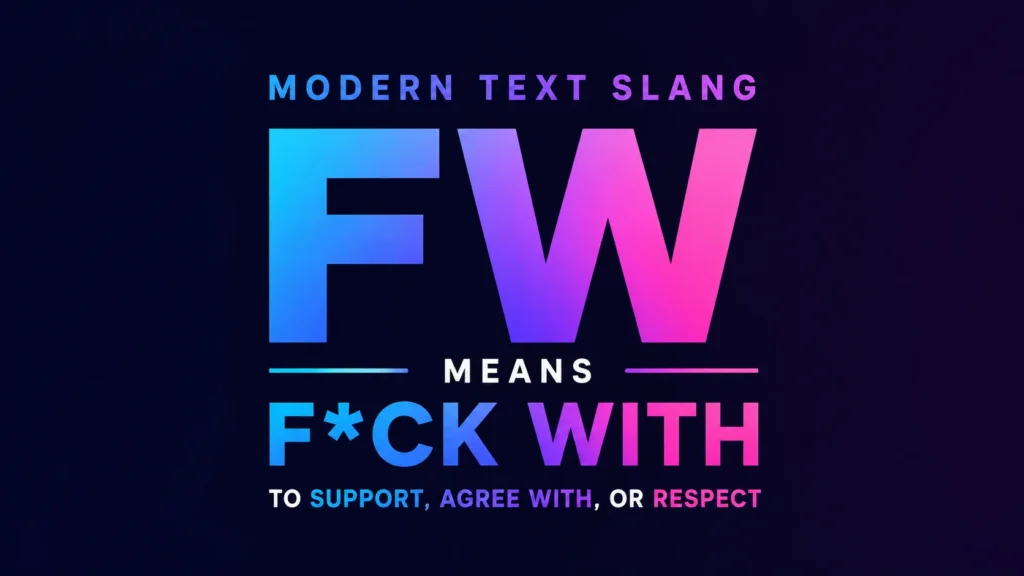
Main Definition of FW
FW usually means:
- “F*ck With”
- In casual English, it often means:
- To like someone
- To support someone
- To vibe with someone
- To associate with someone
The phrase can sound intense because of the original wording, but in modern slang, it’s often used casually among friends or online communities.
Simple Examples
“I fw your style.”
Meaning: I like your style.
“She doesn’t fw fake people.”
Meaning: She avoids fake people.
“You still fw him?”
Meaning: Are you still close to him?
Other Possible Meanings
Although “f*ck with” is the most common meaning, FW can occasionally mean:
- Forward in email conversations
- Firmware in technology discussions
- Friends With in relationship slang
Context always matters.
Origin & Background
Where FW Came From
The phrase “f*ck with” existed in spoken English long before social media became popular. It appeared heavily in urban slang, hip-hop culture, and street conversations in the United States during the 1990s and early 2000s.
Originally, the phrase had two very different meanings:
- To mess with someone
- To strongly like or support someone
Over time, younger internet users began shortening it to “FW” in texts and comments.
Influence of Hip-Hop & Internet Culture
Music played a huge role in spreading the phrase globally. Rappers and online creators frequently used “I fw…” in lyrics, captions, and livestreams.
As TikTok and Instagram culture exploded, the abbreviation became even more popular because short slang fits perfectly into fast online conversations.
Instead of writing:
“I really like this song.”
People now say:
“I fw this song.”
It feels faster, cooler, and more emotionally expressive.
How the Meaning Evolved
Years ago, the phrase sounded more aggressive or confrontational. Today, many people use it casually without thinking about the original wording.
That shift reflects how internet slang evolves:
- Shorter expressions
- Faster communication
- More emotional shorthand
- More identity-based language
FW now often signals connection, loyalty, approval, or shared taste.
Read More : What Is YT? The Real Meaning Behind This Popular Text Slang
Real-Life Conversations
WhatsApp Conversation
1st Person:
You still fw that old group from school?
2nd Person:
Not really. We just grew apart honestly.
Instagram DM
1st Person:
I feel your content is heavy. Your videos feel real.
2nd Person:
That actually means a lot. Thank you.
TikTok Comments
1st Person:
Nobody talks about this artist enough.
2nd Person:
Facts. I’ve fed their music since 2021.
Text Message
1st Person:
Do you fw me or are you just being nice?
2nd Person:
I do. I just take time opening up to people.
These examples show how emotionally flexible the phrase has become. It can sound friendly, romantic, supportive, or deeply personal depending on context.
Emotional & Psychological Meaning
What Emotion Does FW Express?
“FW” often communicates:
- Trust
- Loyalty
- Approval
- Emotional closeness
- Shared identity
- Social connection
Unlike formal language, slang feels emotionally lighter and more natural. That’s one reason people prefer saying:
“I fw you”
instead of:
“I appreciate your personality.”
The slang version feels more genuine in casual digital culture.
Why People Use It
Modern communication moves fast. People want short phrases that still carry emotional meaning.
“FW” works because it:
- Sounds relaxed
- Feels emotionally authentic
- Avoids sounding overly serious
- Creates social closeness quickly
What It Reveals About Modern Communication
Internet language reflects how younger generations communicate emotionally without becoming overly vulnerable.
People often hide sincerity behind casual slang. Saying:
“I fw you”
can actually carry deep emotional weight while still sounding cool and effortless.
Personal-Style Scenario
A college student might text:
“I fw you because you never switch up.”
That sentence sounds casual, but emotionally it means:
- “I trust you.”
- “You’re consistent.”
- “You make me feel safe socially.”
That’s why slang often carries more emotional depth than outsiders realize.
Usage in Different Contexts
Social Media
On social media, “fw” usually means support or approval.
Examples:
- “I fw this aesthetic.”
- “People really fw her videos.”
- “I fw that mindset.”
It helps users express identity and belonging quickly.
Friends & Relationships
Among friends, it can signal loyalty and emotional closeness.
Examples:
- “He’s one of the few people I fw.”
- “I don’t fw drama anymore.”
In romantic situations, it may hint at attraction or emotional interest.
Work or Professional Settings
Using “fw” professionally is usually risky.
It may sound:
- Too informal
- Unprofessional
- Confusing to older audiences
Instead of:
“I fw your proposal.”
Use:
“I really like your proposal.”
Casual vs Serious Tone
Tone matters heavily.
Casual:
“I fw this playlist.”
Serious:
“I only fw people who respect me.”
The second example carries emotional boundaries and personal values.
When NOT to Use It
Professional Environments
Avoid using “fw” in:
- Job interviews
- Emails
- Academic writing
- Business meetings
Not everyone understands slang equally.
Sensitive Conversations
The phrase may sound dismissive during emotional discussions.
For example:
“I don’t fw that.”
could sound cold if someone is discussing something personal.
Cultural Differences
Some people still associate the full phrase with offensive language because of its original wording.
Older audiences or conservative environments may react negatively.
Situations That Cause Misunderstanding
Because “fw” has multiple meanings, people can misunderstand intent.
Examples:
- Romantic interest
- Friendship
- Approval
- Association
Clarity matters in important conversations.
Common Misunderstandings
People Think It Always Means Romance
Not true.
Someone saying:
“I fw you”
does not automatically mean romantic attraction.
Often it simply means:
- Respect
- Friendship
- Support
Tone Confusion
Depending on tone, the phrase can sound:
- Warm
- Aggressive
- Protective
- Distant
Text messages remove vocal cues, so misunderstandings happen easily.
Literal vs Figurative Meaning
Many beginners interpret the phrase literally because of the original wording.
Modern slang usage is mostly figurative and emotionally symbolic.
Comparison Table
| Expression | Meaning | Tone | Common Usage |
| FW | Like/support/connect with | Casual | Texts, social media |
| Vibe with | Emotionally connect | Relaxed | Friend conversations |
| Rock with | Support or agree with | Confident | Music/social slang |
| Mess with | Similar to fw | Informal | Online chats |
| Ignore | Opposite meaning | Cold | Conflict situations |
| Support | Formal version | Neutral | Professional settings |
| Stan | Extreme fandom | Intense | Internet culture |
| Respect | Admiration | Mature | Serious conversations |
Key Insight
“FW” survives because it balances emotion and coolness at the same time. It lets people express connection without sounding overly formal or emotionally exposed.
Variations / Types
I FW You
Means:
- I like you
- I trust you
- I respect you
Don’t FW Me
Means:
- Don’t bother me
- Don’t play games with me
FW That
Means:
- Support something
- Approve of something
Heavy FW
Means:
- Strongly support or like something
Example:
“I heavy fw this brand.”
Still FW
Means:
- Continue supporting or liking someone
FW Heavy
Another variation showing strong approval.
Who You FW?
Means:
- Who are you connected with?
- Who do you associate with?
Don’t Really FW
Means:
- Lack of interest
- Emotional distance
Everybody FW Him
Means:
- Many people like or support him
FW Energy
Used to describe a vibe or personality people enjoy being around.
How to Respond When Someone Uses It
Casual Replies
- “Good looking out.”
- “I appreciate that.”
- “Same here.”
- “That means a lot.”
Funny Replies
- “Finally someone with taste.”
- “You’re officially invited to the cool club.”
- “Took you long enough.”
Mature Replies
- “I respect you too.”
- “I value our connection.”
- “Glad we understand each other.”
Respectful Replies
- “Thank you, genuinely.”
- “That’s kind of you to say.”
- “I appreciate your support.”
Regional & Cultural Usage
Western Culture
In the United States and parts of Europe, “fw” is deeply connected to internet slang, hip-hop culture, and youth communication.
It sounds natural among younger users.
Asian Culture
Many Asian internet users understand the phrase through TikTok, gaming culture, and global social media trends.
However, some may avoid using it directly in formal conversations because English slang can feel culturally unfamiliar.
Middle Eastern Culture
Usage exists mostly among younger bilingual users online.
In conservative settings, people may avoid the phrase because of its original wording.
Global Internet Usage
Social media erased many regional boundaries.
Now users worldwide recognize “fw” through:
- Memes
- Music
- TikTok
- Gaming communities
- Influencer culture
Generational Differences
Gen Z:
- Uses “fw” naturally and frequently
- Understands emotional nuance quickly
Millennials:
- Often understand it
- Use it less casually
Older generations:
- May misunderstand or dislike the phrase
Is It Safe for Kids?
Context Matters
“FW” is generally considered mild slang online, but parents should still understand the context.
Most teenagers use it harmlessly to mean:
- Like
- Support
- Connect with
However, because the abbreviation comes from stronger language originally, some adults may prefer children avoid using it in formal or school environments.
Teaching context awareness is more useful than treating every slang term as automatically harmful.
FAQs
What does FW mean in texting?
In texting, “FW” usually means “with,” which commonly translates to liking, supporting, or connecting with someone or something.
Does FW mean flirting?
Sometimes, but not always. It can express friendship, loyalty, admiration, or romantic interest depending on context.
Is FW rude?
Not necessarily. Among friends and younger users, it’s very common. However, some people may consider it inappropriate in formal settings.
What does “I fw you” mean from a girl or guy?
It usually means:
- “I like you”
- “I trust you”
- “I enjoy your presence”
The exact emotional meaning depends on the relationship.
Is FW a Gen Z slang term?
It became especially popular with Gen Z, although the phrase itself existed long before social media.
Can FW have a negative meaning?
Yes. Phrases like:
“Don’t fw me”
can sound defensive, confrontational, or emotionally serious.
What’s the difference between FW and vibe with?
“FW” often implies stronger loyalty or support, while “vibe with” focuses more on emotional compatibility or shared energy.
Conclusion
The meaning of fw goes far beyond a simple internet abbreviation. It reflects how modern communication blends emotion, identity, loyalty, and social connection into short digital expressions.
What makes the phrase powerful is its flexibility. It can express friendship, trust, support, attraction, or emotional alignment in just two letters.
Still, context matters. The same phrase can sound playful in one conversation and deeply emotional in another. Understanding tone, audience, and culture helps you use it naturally and confidently.
As online language continues evolving, slang like “fw” reminds us that people still want genuine connection — even in the shortest messages.




1 thought on “Meaning of FW: Means in Social Media, and Modern Conversations”